Your Name Turns 10: Makoto Shinkai’s Hit That Reshaped Anime Box Office
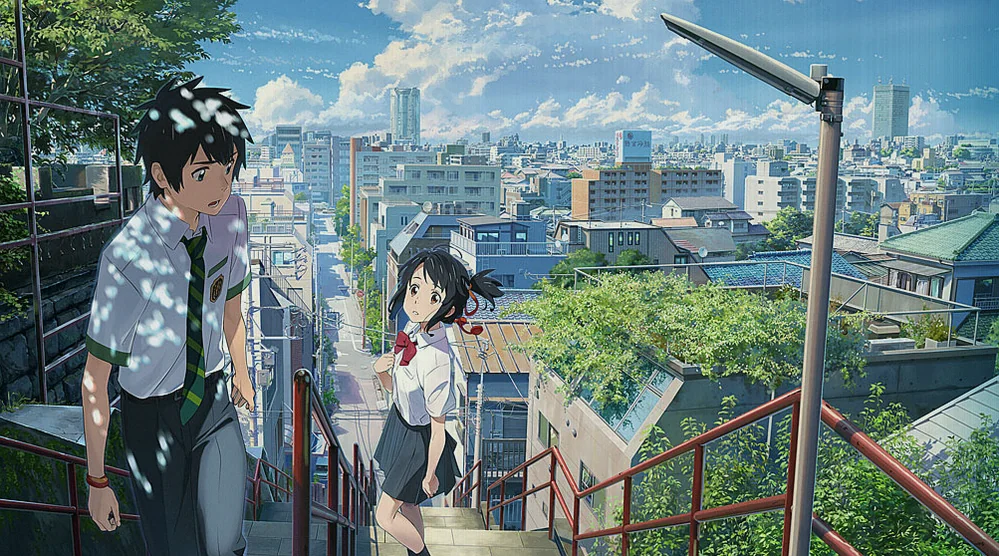
Ten years after its Japanese release, Your Name. remains one of the defining hits of modern anime cinema—an emotional body-swap romance that helped reshape the industry’s box-office expectations and, in the years that followed, influenced how big-screen anime aimed for mass appeal.
Makoto Shinkai’s film follows Mitsuha, a high school student living in a rural mountain town where her father—also the town’s mayor—is rarely home. She shares her life with her little sister and her grandmother, and daydreams about a completely different existence in Tokyo. Across the same distance of imagination, Taki lives in central Tokyo, spending time with friends, working part-time at an Italian restaurant, and nurturing interests in architecture and fine art. The connection between them begins with dreams: Mitsuha experiences being a young man, while Taki dreams of being a female high school student in a mountain village he’s never visited. The movie builds from that mystery into a story about what those dreams are really pointing toward.
Shinkai marked the decade milestone with a message posted online, accompanied by an early version of the film’s poster. In the note, he said it had been ten years since the release, expressed happiness that the story still stays with people, and thanked the production team and everyone connected to the project for the “happy experiences” gained through making Your Name.
From Ghibli’s gap to a new box-office king
To understand why Your Name. landed so hard, you have to look at the changing economics of Japanese film attendance. In the postwar era, live-action movies long dominated Japan’s box office. The first major turning point came in 1979, when Galaxy Express 999 by Rintaro became the highest-grossing Japanese film of the year—though the absolute winner of that year’s top spot was an American blockbuster, the first Superman directed by Richard Donner.
Another decade-long stretch followed before an animated film returned to the top of the Japanese box office as a repeatable outcome. With Studio Ghibli’s presence, Kiki (1989) and Grave of the Fireflies (1991) reached first place among Japanese titles, but even then, the all-studio, all-country top slot was shared by major foreign releases—Indiana Jones and the Last Crusade in 1989 and Terminator 2 in 1991. The first time an animated Japanese film took the absolute box-office lead came in 1992 with Porco Rosso, which outperformed Hook—Captain Hook.
After Porco Rosso, animated success became more common: multiple Ghibli films reached the highest-grossing Japanese movie of the year, and Pokémon also managed to climb to top positions with its second and third theatrical entries. Still, one figure was consistently able to dominate the absolute year rankings across both Japan and the West—Hayao Miyazaki—achieving the overall top-grossing slot with Princess Mononoke (1997), Spirited Away (2001), Howl’s Moving Castle (2005), Ponyo (2008), and The Wind Rises (2013).
Then in 2014, Studio Ghibli said it had no intention of making further films. The announcement spread globally and shook the industry, leaving many talented animators and creators searching for new ways to work.
That vacuum became the backdrop for Shinkai’s breakthrough. Your Name. arrived at exactly the right moment to benefit from what was described as the “fourth Anime Boom,” supported by a wider international discovery of anime through streaming platforms. In the same period, Japan’s anime exposure expanded while China removed a ban on distributing Japanese films in cinemas and began making major investments in anime—buying existing products for its streaming services, taking direct stakes in production committees for titles that were still being developed, and also subcontracting Japanese studios for projects tied to its own IP.
In Japan, Your Name. did not just perform well—it dominated. The film stayed at number one on Japanese box-office charts for two months, finishing its run behind Spirited Away, Titanic, and Frozen. With more than 25 billion yen, it became the top-grossing Japanese film of 2016 and also surpassed Star Wars: The Force Awakens to claim the best result of the year across both Japanese and Western releases. The film also marked the first time a Japanese animated movie not directed by Hayao Miyazaki topped the annual box office including Western films. This was not treated as a one-off either: Shinkai repeated the feat with Weathering With You in 2019, and the period produced a run where anime repeatedly led yearly earnings until Bohemian Rhapsody in 2018 was the last non-anime film to take the yearly crown.
Shinkai’s climb—and the collaborators who changed the animation
Before Your Name., Shinkai built an audience but not on blockbuster scale. His early work included the short She and Her Cat and especially the 25-minute The Voice of the Stars, which became notable because Shinkai handled almost all of it himself, with support primarily on the sound side. The success encouraged him to keep moving toward feature films, gradually increasing his popularity among fans with titles such as Beyond the Clouds: A Promise to the Future (2004), 5 Centimeters Per Second (2007), Children Who Chase Lost Voices / The Journey to Agartha (2011), and The Garden of Words (2013).
A different kind of collaboration set the stage for the eventual leap. In 2014, the correspondence education company Z-Kai released an animated web video called Cross Road, a 120-second short meant to help students preparing for university entrance exams feel less alone in their goals. It was produced by CoMix Wave Films, Shinkai’s company, and involved character designer/animator Masayoshi Tanaka, alongside much of the main staff from The Garden of Words. The collaboration was productive enough that the partnership was carried forward into Shinkai’s next film.
Shinkai’s approach before Your Name. had leaned heavily on backgrounds and cinematography, resulting in visually striking films but with animation that wasn’t always considered equally memorable. For Your Name., Tanaka created standout character designs, but his schedule prevented him from handling the film’s animation work fully. That forced Shinkai to look for someone who could devote themselves completely to the project’s animation direction.
He chose Masashi Ando, a character designer and animation director with experience working with major filmmakers including Hayao Miyazaki, Isao Takahata, Mamoru Oshii, and Satoshi Kon. The decision also mattered because Ando was seeking new, stimulating work after Kon’s death and the end of the Studio Ghibli era.
Ando accepted the role because he was interested in working from Tanaka’s original artwork, with Tanaka personally adapting the designs for animation. Industry attention followed quickly: the news that a seasoned, highly respected veteran was leading animation on Your Name. helped pull in a large group of experienced animators—so many that Shinkai suddenly had access to a dream-team level of talent. Even some former Ghibli staff who had been waiting for work reached out to collaborate again, and animators outside the Ghibli network also wanted to be part of the production.
Within that team, the film’s standout strength became the precision and discipline brought to performance animation—especially gesture, movement, and facial expression. Those choices fit the movie’s core concept of characters switching bodies: the film makes it clear visually which person is inside which body, while still letting Mitsuha and Taki feel distinct regardless of whose body they inhabit. The result is a level of emotional immediacy the article described as missing from Shinkai’s earlier work, turning Mitsuha and Taki into characters audiences could connect with on a personal level.
Over time, Your Name. became a symbol of the post-Ghibli anime film era and a banner title for the fourth Anime Boom. Its success helped bring a new generation of younger viewers to Shinkai, who then followed with Weathering With You and Suzume, widely treated as an environmental disaster-themed trilogy. The film’s influence also showed up in the increasing number of similar stories over the last decade, especially those centered on romantic relationships told through the same kind of emotional framing.
For Italian audiences, Your Name. reached theaters through Dynit, with a three-day cinema event that was extended with additional dates after strong demand. It was also shown alongside The Garden of Words as part of a “Makoto Shinkai Night.” The film is currently available on DVD and Blu-ray, and it can be streamed on Netflix and DAnime, a themed channel available through Amazon Prime Video.