Graphic Novel Debunks Myth: Enigma Cracked by Many, Not One Genius
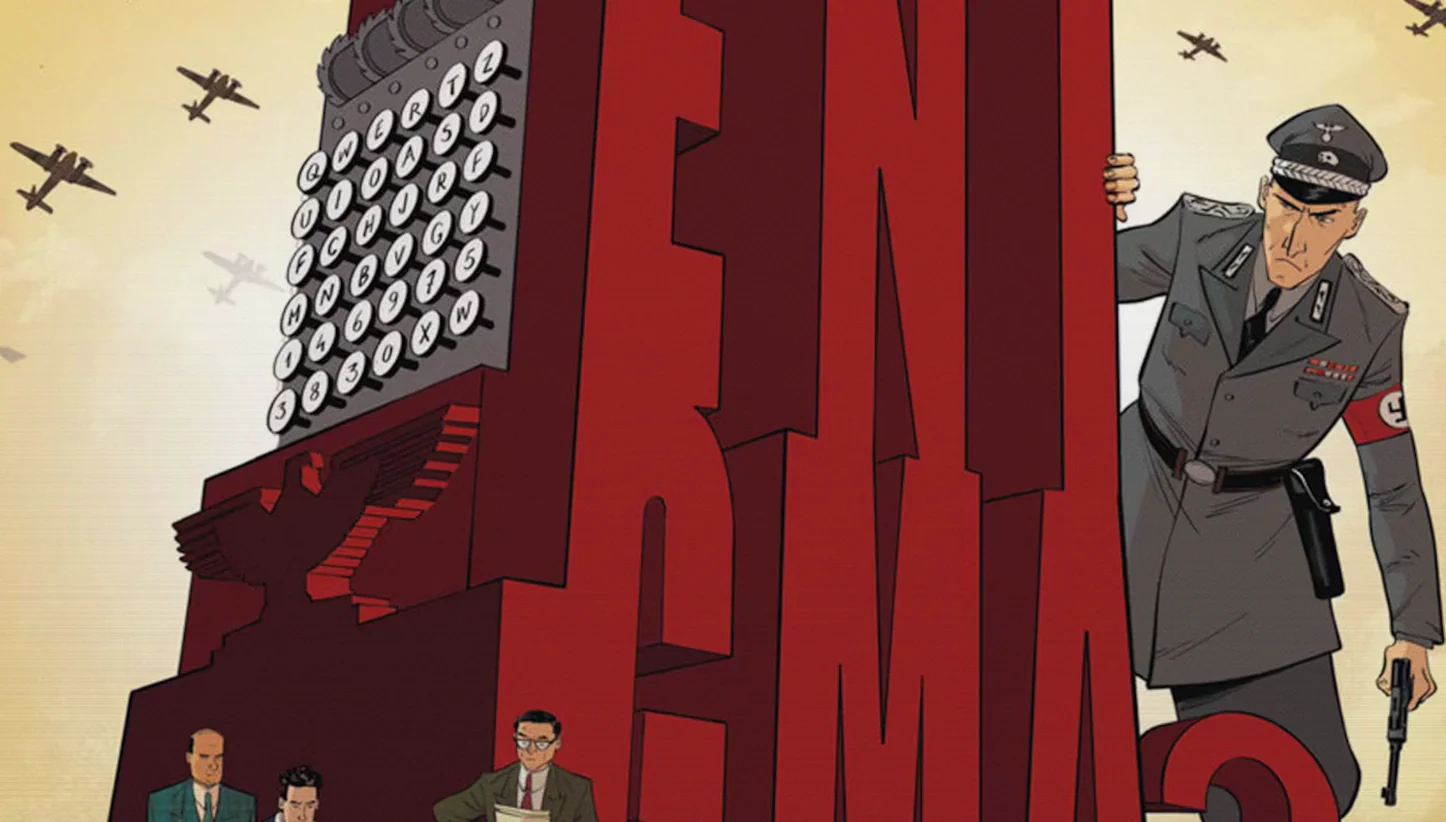
A graphic novel adaptation is set to challenge one of the most persistent World War II myths: the idea that the German Enigma cipher was cracked by a single genius. The hardcover book centers on the long chain of work that led to decryption—highlighting lesser-known contributors, shifting responsibilities across countries, and the human cost behind the breakthroughs.
A new graphic-novel look at the Enigma myth
The project brings together authors Fabien Tillon, Dermot Turing, and Lelio Bonaccorso, translating Dermot Turing’s historical essay into a story that blends espionage, history, and educational context. The book is scheduled for release on July 10, 2026, with a hardcover format, 120 pages, and ISBN 9791388003165, published by cARTEm Cómics.
The premise is straightforward: Alan Turing mattered, but he was presented as the final link in a process already in motion for nearly a decade. The narrative aims to show how early research and international cooperation laid the groundwork long before Britain brought the project into a more specialized phase.
From spycraft leads to a decade-long cryptography push
-
The story opens like a classic intelligence thriller: a French intelligence agent obtains a lead pointing to an apparently unbreakable German encryption system used by the German military. In exchange for money, the agent receives documents confirming the system’s existence, though neither the French nor the British fully understand their significance at first.
-
The agent, identified as Gustave Bertrand, connects with Polish cryptographers who were already working on the wider problem. In 1931, the material Bertrand helps uncover provides Marian Rejewski with the missing piece needed to make decisive progress.
-
Even for a mathematical prodigy, the internal logic of the system still takes more than a year to unravel. A major complication is that Enigma does not remain static; the cipher changes over time, so new advances can become outdated quickly.
-
By 1938, the British begin treating the German threat with greater urgency and set up specialized teams to decrypt enemy communications. This is where Alan Turing enters as a leader in a new phase, driving forward the machines that accelerate message decryption.
-
A further turning point comes when the British obtain key documentation after capturing a German submarine. Even with that crucial puzzle piece, the book stresses that the outcome was not the work of one person, but years of accumulated effort and cooperation among spies, mathematicians, cryptographers, and military figures across France, Poland, and Britain.
What the book argues—and how it handles the aftermath
Rather than presenting Enigma’s defeat as a lone hero moment, the narrative repeatedly returns to a single message: the cipher was overcome through collaboration between intelligence networks, mathematical experts, cryptographers, and French, Polish, and British military communities.
The account is also framed with an emphasis on consequences. The epilogue focuses on the fates of key participants, pushing back against the heroic image popularized by many film portrayals. The book states that many involved in the early stages ultimately suffered tragic outcomes: espionage networks were dismantled by the Nazis, and numerous collaborators disappeared or died during the conflict. Meanwhile, the British team ultimately received the public recognition for work that spanned almost three decades and involved countless sacrifices.
Adaptation choices: clear storytelling, but room left on the table
Dermot Turing’s historical research—supported by scattered documentation across international archives and covering events unfolding across more than 15 years—is translated into a graphic format described as agile and approachable. The first half prioritizes intelligence operations and spy suspense, while the second shifts focus toward the scientists and cryptographers whose technical contributions drove the project forward.
Artist Lelio Bonaccorso is credited with a clean, classic franco-belgian comic style, including flat colors and traditional page composition. However, the adaptation is also criticized for occasionally letting large contemplative illustrations take up too much space, with some historical explanations and key context moving too quickly as a result.
The writer’s own supplementary material is said to acknowledge that the volume had to cut significant portions of the broader story—especially areas tied to the later trajectories of Polish cryptographers and other central figures—reinforcing the sense that the narrative had enough material to go deeper.
Release details
-
Title: Who Deciphered Enigma? (as presented in the source text)
-
Authors: Fabien Tillon, Dermot Turing, Lelio Bonaccorso
-
Format: Hardcover
-
Release date: July 10, 2026
-
Length: 120 pages
-
Publisher: cARTEm Cómics
-
ISBN: 9791388003165