How the COVID Era Turned Tabletop RPGs Into a Mainstream Craze
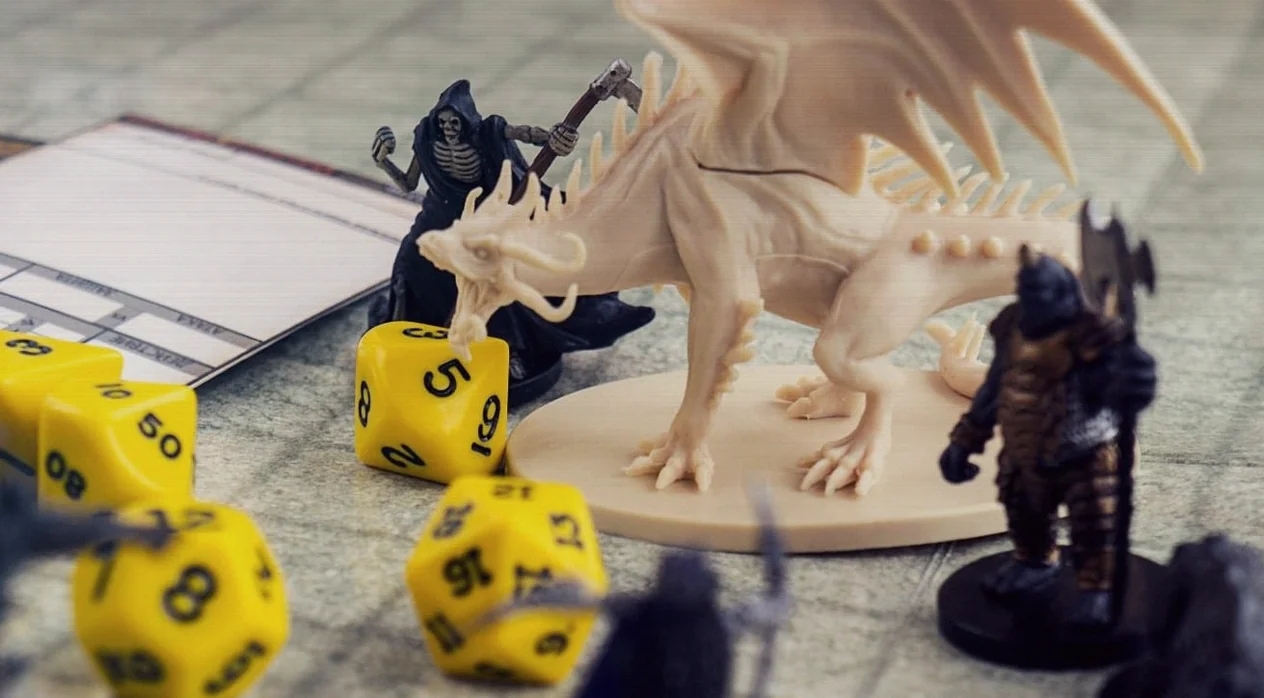
For more than a year, many of us have been navigating limits on social gatherings—sometimes light restrictions, sometimes full lockdowns—because of the Covid-19 pandemic. While it’s no surprise that video game sales surged during that period, there’s another shift that’s been just as striking: tabletop role-playing games (TTRPGs), which were long associated with meeting face-to-face, have also exploded in popularity.
During Melbourne International Games Week 2021, John Coleman from the Australian Roleplay Community (A.R.C.) and independent TTRPG creator Aaron Lim dug into a question that’s been on a lot of players’ minds: how did tabletop RPGs move from the cultural edges into the mainstream after decades of being largely niche?
“The paradox of not being able to sit around a table is that tabletop games have grown exponentially, and role-playing games, in particular, have been on an extraordinary growth curve,” Coleman said. He also pointed out that the A.R.C. sits near the center of Australia’s TTRPG scene, tracing its roots back to Arcanacon, a well-known tabletop convention based in Melbourne.
Lim agreed that timing and circumstances mattered. “There’s a perfect confluence of a lot of things I think,” he said. “Once you’re used to doing hangouts on Zoom and Discord, it’s not that far of a jump.”
That “jump” turned out to be easier than many players expected. The pandemic forced people into online social routines, and at the same time, a wave of virtual tabletop tools removed long-running friction for the hobby. With solutions such as the Melbourne-made Arkenforge, groups no longer need to travel to a single location carrying everything they’d normally bring—rulebooks, maps, dice, character sheets, and miniatures. Instead, players can run full campaigns together online, wherever they are.
Lim also highlighted how major mainstream hits helped carry the genre forward. “Dungeons & Dragons fifth edition has been a big success for Wizards [of the Coast] and it’s spilled out into the culture in the last six years or so,” he said. “Probably even earlier if you count D&D Next (the public testing prototype) as well.”
That “big success” framing doesn’t fully capture the scale. At an investor event in February, Hasbro—Wizards’ corporate parent—reported that the D&D business was generating more annual profit than its core toy division. Over the past year and a half, D&D products have spread beyond major Australian entertainment retailers like JB Hi-Fi and EB Games, appearing in department stores including Kmart and Myer as well.
Even with D&D clearly dominating the conversation, it isn’t the only RPG system growing. One of the most noticeable changes across the tabletop community has been the broadening of who gets to play and who gets to design, moving beyond the hobby’s historically male-leaning roots.
Coleman described what he’s been seeing firsthand. “We are seeing a very strong diversity engagement,” he said. “A lot of women engaging in our events, which we work very hard to encourage, and a lot of people who are queer-identifying also—and again, we work very hard to engage with that community also. Coming out of that is games that people are writing and developing out of those audiences that are unlike things we have seen before, which is super exciting.”
That excitement is showing up in new releases and crowdfunding successes. In February, the brand-new independent TTRPG Coyote and Crow brought in more than one million U.S. dollars on Kickstarter. The setting is a science-fiction fantasy world where the North American continent was never colonised, and the design team is made up almost entirely of creators from Native American tribes and nations. A few months earlier, queer swashbuckling adventure game Thirsty Sword Lesbians exceeded its Kickstarter goal by fourteen times and has since become widely available in print at tabletop RPG stores.
Lim’s most recent project, An Altogether Different River, is also aimed at different storytelling priorities. It’s a collaborative narrative game focused on the contrast between people who return to a town years after leaving and those who never left in the first place. Lim said the work draws directly from his own experience of moving back to Malaysia in 2019 after years living in Melbourne. In both theme and mechanics, it’s positioned as a departure from the anglo-centric swords-and-sorcery style often associated with D&D.
The game’s Kickstarter for a limited physical release launched with an AU $1,800 target, and it ended up tripling that goal in February. Afterward, it was featured at the Freeplay Parallels showcase, and it also appeared through A.R.C.’s “MIGW at the Table” event during this year’s Melbourne International Games Week.
Lim summed up the genre’s momentum with a comparison to modern internet culture. “Role-playing games are actually a lot like a meme, right? It works best when it passes from person to person,” he said. “So the use of YouTube and Twitch makes it easier for, ‘oh, this is how you can play,’ and this is how people play, and in a way that is like, packaged up for consumption.”
Streaming platforms have become a major bridge into the hobby, and the numbers behind that visibility are hard to ignore. Although Twitch is widely thought of as a place where video game live streams dominate, a recent dump of hacked platform data suggested that the TTRPG show Critical Role isn’t just the most-watched channel—it’s also the highest-earning. The dataset claimed the Role team received a total of U.S. $9,626,712 paid out between August 2019 and October 2021.
Coleman also noted that A.R.C. live streams gained more viewers after the pandemic began. At Melbourne International Games Week 2020, he said the stream audience was around 20 or 30 people. “The week after MIGW, people were coming back and watching our streams and that was jumping up to 100, 130,” Coleman explained. “The stream that we ran from MIGW this year exceeded 1,100.”
He added that their audience surprises him in unexpected ways. “When we see breakdowns of where people are coming from, we have a bunch of Argentinian fans,” he said, laughing. “They watch everything we do. We don’t know who they are or how they found out about it—but there’s like half a dozen of them. They’re our biggest fans.”
For anyone who’s been curious about jumping into tabletop RPGs, Coleman and Lim’s comments point to a clear takeaway: right now, it’s never been easier to get started.
The next A.R.C. event, Goblins of Zarth, is positioned as a newcomer-friendly entry point. Sessions are scheduled in three-hour blocks across the weekends in November.
This piece was commissioned as part of the 2021 Wordplay games writing mentorship program, a partnership between GamesHub and Melbourne International Games Week. Special thanks to mentors Alice Clarke, Dan Golding, Rae Johnson, Brendan Keogh, Jini Maxwell, and Edmond Tran.
Essential Casino & Betting Guides
Looking for the best casinos or betting sites? Below you’ll find our recommended guides that players love right now.
- Australian Online Casinos
- Online Casino Promotions NZ
- Real Money Casino Apps NZ
- NZ Sports Betting Sites
- New Zealand Bitcoin Casino Sites
- Top 10 Payout Casinos in New Zealand
Jam Walker is a games and entertainment journalist from Melbourne, Australia. They hold a bachelor’s degree in game design from RMIT, but perhaps should have chosen journalism instead. They can be found posting about wrestling far too much on Twitter at @Jamwa.
- Melbourne International Games Week
- MIGW
- Tabletop
- Wordplay
- Related News
- Trending News
Categories
Latest News
Despite active promotion of State of Decay 3, it appears Undead Labs is also on the list of studios that may face closure, sell off, or layoffs under Xbox’s most recent…