GoldenEye 007’s Nintendo 64 Origin: How Rare Turned Console FPS Into Cinema
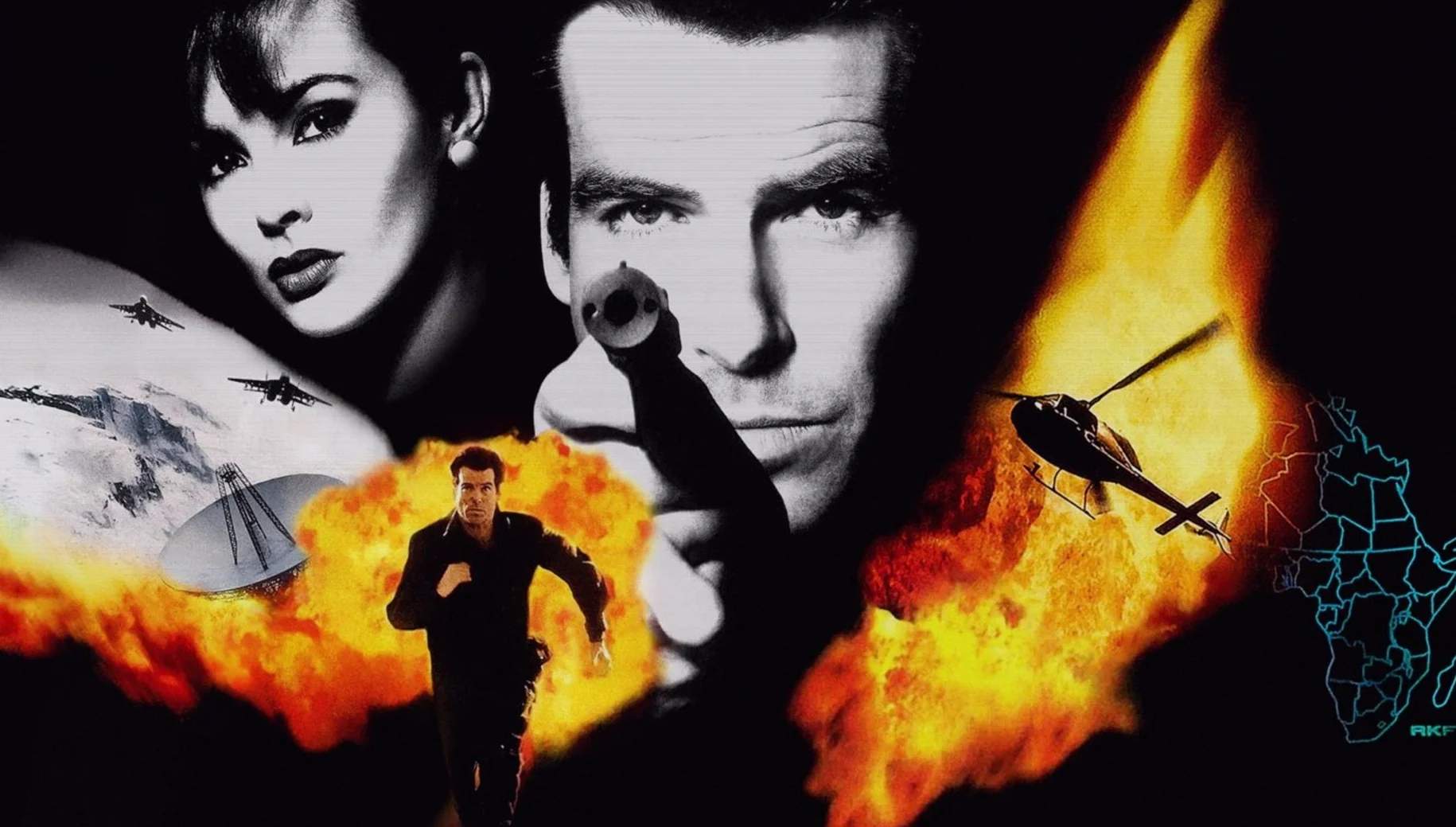
Rare’s James Bond shooter GoldenEye 007 has spent the decades since its launch as one of Nintendo 64’s most indelible games—and its origin story is just as surprising as its lasting impact. Built by a team that was largely new to the FPS genre, it turned the “DOOM-like” era of console shooting into something more tactical, more cinematic, and built to be remembered.
Key takeaways
- GoldenEye 007 launched on August 25, 1997 for Nintendo 64.
- Rare’s development was led by Martin Hollis, a long-time James Bond fan brought in to push the project forward.
- The game was developed at a time when Rare’s teams were still learning 3D development, including an early phase that lacked both a development kit and access to Nintendo 64 hardware.
- GoldenEye 007 features a mission structure built around objectives that can often be completed in different ways and orders depending on difficulty.
- The title reached over 8 million copies sold on Nintendo 64, outpacing most of the system’s library except Super Mario 64 and Mario Kart 64.
- A documentary titled GoldenEra was released in 2022 via Prime Video to mark the game’s 25th anniversary.
From film license to Nintendo 64 FPS
Rare had already established itself as a major British studio by the mid-1980s, but GoldenEye 007 arrived as a rare kind of risk. Nintendo became a key owner of Rare in the mid-1990s, and during that period Nintendo proposed turning the James Bond movie license into a game.
Rare didn’t match the typical profile of studios known for Bond adaptations, and the company’s identity leaned toward producing family-friendly titles. Still, the project gained momentum through Martin Hollis, who stepped in with enthusiasm for James Bond while setting expectations that the game should not be built for Super Nintendo. The plan shifted with the industry’s move toward 3D: the Nintendo 64 was the target platform, described at the time as the next step beyond earlier approaches.
Even then, building a 3D shooter was still largely uncharted territory. Early development included a cautious foundation: Rare initially considered a rail shooter structure similar to the kind of arcade-style experiences seen in 1994’s Virtua Cop. Ultimately, the game became the FPS many players still associate with Nintendo 64’s golden era.
Development hurdles, then a multiplayer breakthrough
Despite a “spontaneous” crunch period involving the young team, development stretched longer than would be expected for a game of that era. Part of the challenge was technical and logistical: the first 18 months reportedly proceeded without a Nintendo 64 development kit and without the team having Nintendo 64 controllers in hand.
Nintendo later provided an extension to expand the project with a multiplayer mode. That multiplayer component quickly impressed Nintendo of America testers, helping the game stand out before launch. With the release window approaching, the timing mattered: the film had already been in theaters for nearly two years, and GoldenEye 007 needed to be ready by the time the next wave of Bond-related conversation took over.
It released on August 25, 1997. While it wasn’t framed as a historic first-week phenomenon, the game benefited heavily from strong word-of-mouth and unanimous critical praise.
Design that moved beyond “reach point A to point B”
GoldenEye 007 wasn’t the first high-quality FPS on consoles, but it arrived early enough to break from the more rigid structural patterns associated with DOOM and Quake. Interestingly, even as CDs were gaining dominance, the cartridge format of the Nintendo 64 played a role in carrying the genre forward on that platform. Earlier in 1997, Turok: Dinosaur Hunter had already demonstrated what 3D FPS gameplay could look like on Nintendo 64, setting the stage for Rare to write a new chapter soon after.
The early levels showcased a different kind of freedom. The first mission, set at a dam, made players feel like they had more room to move than the genre typically offered. The follow-up level, Facility, is described as the point where many realized they were dealing with something meaningfully different from earlier console shooters.
Instead of treating missions as straightforward routes to eliminate everything, the game presented objective lists for each mission. Objectives varied with chosen difficulty and could generally be tackled in more than one order. As a spy story rather than a pure firefight loop, players could search for documents, meet contacts, disable surveillance cameras, locate Natalya, and escape with her—often with multiple routes and approaches.
The mission-based structure also drew comparisons to earlier licensed FPS ideas, including the 1995 Star Wars: Dark Forces, which had already introduced the concept of mission objectives as part of its design.
AI, weapons, and the tactile feel of Nintendo 64 shooting
Beyond its mission design, GoldenEye 007 pushed forward with an AI that could react to player actions in ways that felt advanced for its time. Enemies patrolled, responded to noise, raised alarms, took cover, and even used evasive movements to disrupt aiming. Modern players may consider some of these behaviors basic now, but the game’s contemporaries weren’t seeing that level of reactive enemy behavior consistently.
Weapon variety reinforced the tactical feel. The game includes 18 weapons, ranging from a machine gun to rocket launchers, as well as melee combat and grenades. Two tools in particular were highlighted for their tactical options: the PP7 with a suppressor and a sniper rifle with zoom.
Damage modeling also mattered: what part of an enemy’s body you hit affected how they reacted. Combined with the game’s free aiming and the ability to shoot with intent—quietly, from unexpected angles, or through environmental chaos—this created moments that ranged from stealthy takedowns to escalating destruction without always knowing what the next mission would demand.
The game’s structure supported unpredictability, too. There were 20 missions in total when counting bonus missions.
Sales, industry influence, and a 25-year celebration
GoldenEye 007 became a defining “cult” entry for its generation, with the cartridge-era hardware and Nintendo 64’s analog stick controller design often cited as part of the recipe that made the shooting feel distinctive. Rare’s success with the title translated into blockbuster-like numbers for the platform: the game surpassed 8 million units sold. Considering Nintendo 64’s total install base barely crossed 30 million, that performance was exceptional, with only Super Mario 64 and Mario Kart 64 reportedly doing better.
Its influence extended beyond sales. The game is credited as a pioneer of first-person infiltration and as a template for building sandbox-like scenarios that later inspired what would be called immersive simulations. The article’s framing connects that lineage to major FPS and immersive RPG/FPS hybrids, naming Half-Life, Deus Ex, and Halo as descendants of ideas popularized by GoldenEye 007.
To mark the game’s 25th anniversary, a documentary called GoldenEra was released in 2022 on Prime Video.