Chants of Sennaar Creator Julien Moya on Building Its Imaginary Languages
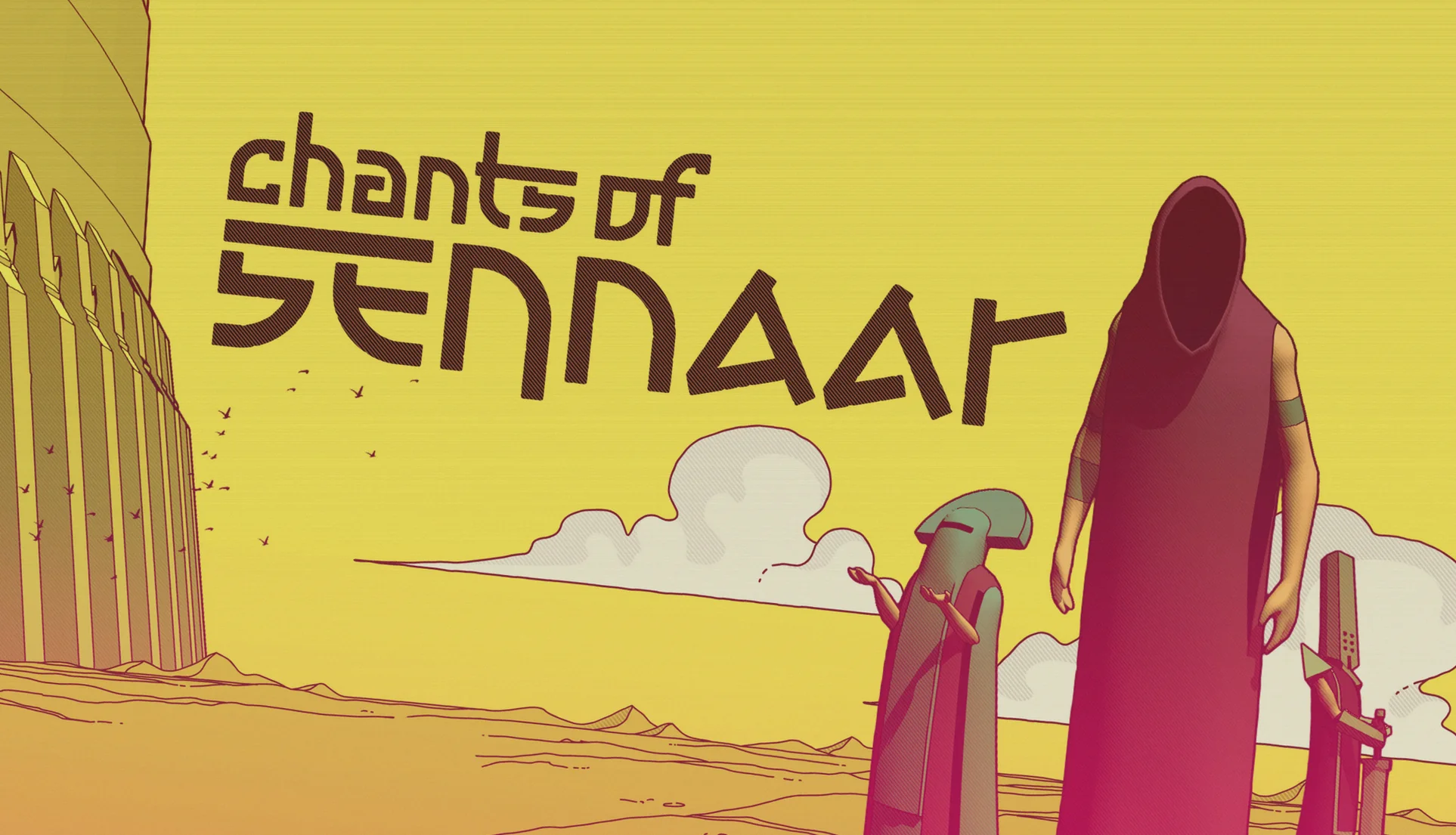
Chants of Sennaar has become a rare kind of puzzle game: one where the language isn’t a theme you decorate with, but the mechanism that teaches you how to think. Behind its success is Toulouse studio Rundisc co-founder Julien Moya, who describes how the team built a whole suite of interconnected imaginary tongues—then designed gameplay systems, art direction, and localization to make those languages playable for players across many regions.
From a radical art style to a world built for deduction
Rundisc approached the project with a clear constraint: as a micro-team of roughly five or six people, it couldn’t realistically compete with bigger-budget production values. Instead, the studio chose to go “radically different,” aiming to avoid constant comparisons to photorealistic Unreal or Unity projects.
Moya points to three major influence pillars shaping the game’s look and feel. First were 1980s-leaning adventure and exploration games Moya played intensely as a child, with strange atmospheres created by the technical limits of the era. That led to choices he calls “bizarre,” such as the character’s look, heavily labyrinthine spaces, and stairways everywhere.
The second influence came from Franco-Belgian comics, tied to discussions with Rundisc co-founder Thomas Panuel and Moya’s long-standing admiration for Philippe Druillet. Moya highlights Druillet’s use of extremely bold colors—examples like concrete yellow, electric blue, and dyed red—framed as part of a broader 1970s counterculture.
The third influence was architecture. Moya describes frequent inspiration drawn from buildings and city layouts, including a direct personal starting point: the cathedral Saint-Étienne at the center of Toulouse. The team leaned into a Romanesque architectural vibe, then deliberately paired it with non-realistic, comic-like colors.
Technically and artistically, the style was developed through simplified geometry rather than texture-heavy modeling. Moya says the game uses no textures and essentially a single light, then uses rendering and line treatment to make the visuals feel like comic panels. He also cites further inspiration from artists and architects associated with distinctive city concepts, including references tied to Moebius and the illustrated “cities” tradition that treats architecture as story material.
Gameplay pivot: building a language learning game on observation
While the visuals formed early, the core gameplay concept changed direction as development progressed. The studio initially had a different premise: a survival-adventure scenario where the player wakes inside an odd abbey and an odd sect, needing to escape by observing people, imitating them, and avoiding being caught—so there was observation and imitation, but not language learning.
The team then realized they had a growing scenario with phrases already being written, but they felt the overall idea wasn’t as original or radical as the art direction. That’s when Moya brought up Heaven’s Vault, which he had played but not finished; he loved the foundational premise of learning an unknown language, yet wanted a different implementation over a longer arc.
Instead of learning a “dead” language from ancient writings, Rundisc chose “a living language” approach: learning through observation, through speakers encountered in an active world, and through multiple interconnected languages. The end result is a set of five languages linked together in a broader story centered on bringing different peoples into alignment.
- The team started with a survival-adventure imitation concept inside a strange religious setting.
- They shifted toward language learning after concluding the original concept didn’t match the desired level of “radical” distinctiveness.
- They designed the language system around living speakers and a world that supports deduction rather than scripted clicks.
- They structured the final concept so the player’s progress in language understanding feeds directly back into solving puzzles.
Design philosophy: deduction loops with coherence everywhere
Moya credits multiple puzzle and deduction-minded games as key inspirations for how to structure the logic of discovery. He calls out Outer Wilds as a major reference for how deduction and discovery can be organic—living inside a coherent world where systems exist for story reasons, rather than functioning as classic point-and-click puzzle scaffolding.
He also cites The Witness for transparent puzzle presentation, and Return of the Obra Dinn for the idea that clues can appear anywhere in varied forms, plus its validation approach. In Rundisc’s system, multiple “slots” can be validated at once, reducing the urge to brute-force answers while still feeling like an active mental test for the player’s hypotheses.
On top of that, The Talos Principle is referenced for having layered gameplay: obvious puzzles on the surface and a deeper narrative stratum that reveals itself as players pay more attention.
Development was described as difficult in two particular phases. The hardest period came when the team tried to implement the main gameplay loop—at one point there wasn’t even a journal, and no verification occurred until late. Moya says they also tried color-based player certainty marking, but found it effectively unusable once considering completion rates and partial understanding.
Eventually, they found a set of ideas that “unlocked” progress, but the most complex part of the work was writing. All dialogues and inscriptions had to be crafted as a cross between scenario writing, game design, level design, and staging, with everything written concurrently.
Moya describes the finished build process as unusually linear for development: they created the first level, then the second, then the third, and so on, while still maintaining a global scenario plan. He also notes that the team’s small size reduced communication overhead, with him handling most art work and Thomas serving as the primary developer, enabling a two-and-a-half-year development timeline.
Five languages, limited words, and grammar rules built as puzzle parts
For the language creation, Moya frames it as two components: “the substance” and “the form.” The substance is the word corpus—he says the studio selected roughly 30 to 40 words per language so the team could tell story pieces, build puzzles, and connect everything to the end goal of uniting peoples.
The form is the glyph design: how characters look, how they’re organized, and how they structure themselves graphically. Moya stresses that writing is the graphical incarnation of language, and language is an expression of culture—so the team started from cultural differences between five peoples, each with its own history, technology, mindset, values, and relationships.
He describes the studio’s approach as blending influences rather than doing scientific linguistics. The team did not consult language professionals and didn’t aim for linguistic realism; instead, they used inspirations to make the glyphs feel right, match the world’s factions, and deliver “exotism and difference” through familiar cultural echoes.
How inspiration maps onto each people
Moya explains that the first people’s architecture draws from southern European antiquity and medieval Mediterranean styles, while the glyph look takes cues from sources tied to Latin and Phoenician, plus a hint of cuneiform. He says one level’s language form is explicitly inspired by Norse futhark runes.
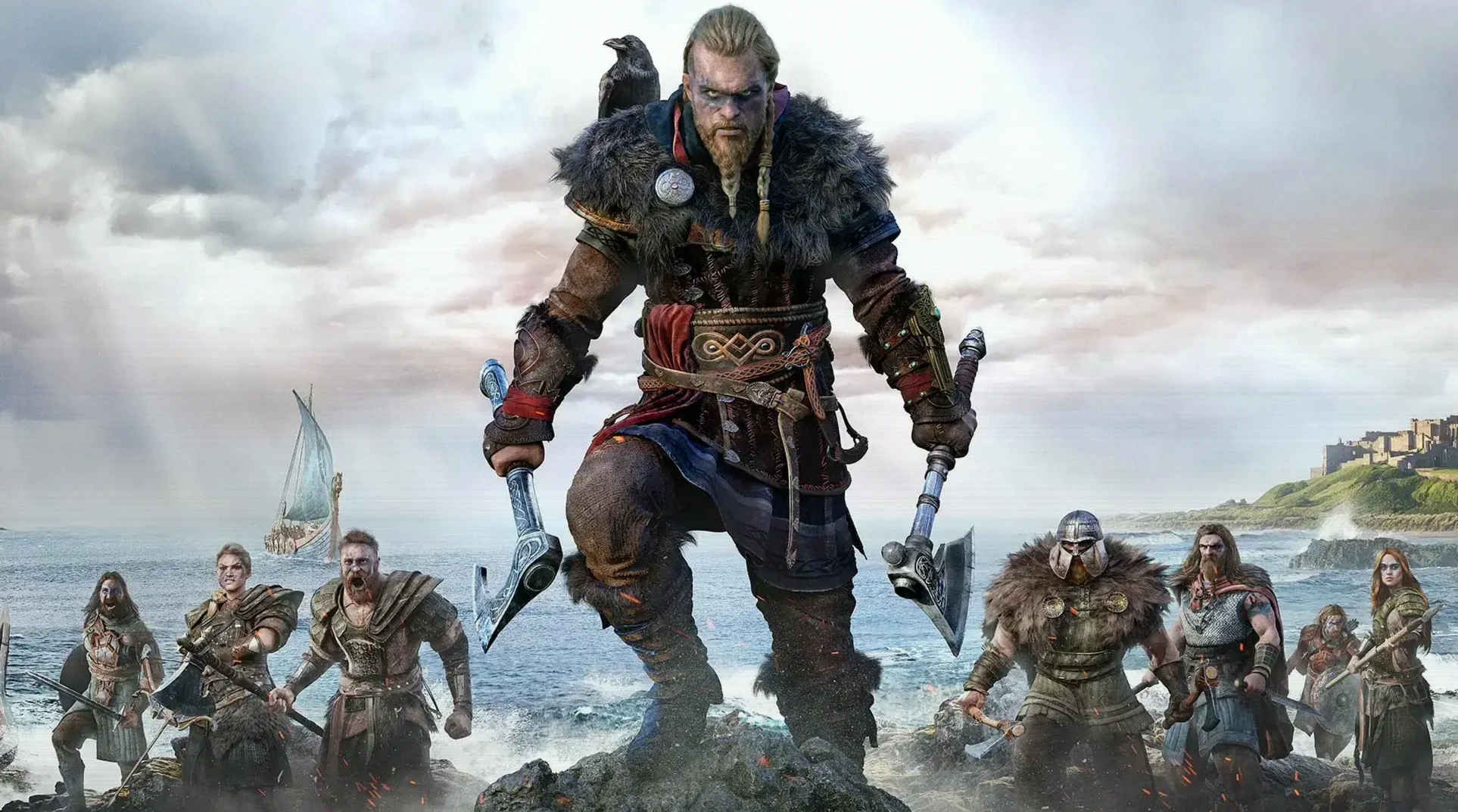
He also connects a “mariners/warriors” group to Viking imagery, stating that the writing and small showings allow players to fill in gaps from broader cultural imagination. For the “bard” people, he describes them as aesthetes drawn to philosophy, beauty, theater, and music, and says their script takes inspiration from Devanagari as well as reversed Hebrew forms and Arabic influences. Their architectural level combines Indian-inspired elements with Andalusian architecture tied to the long Moorish presence in Spain.
He also references a numeric or symbolic system linked to Cistercian monastic tradition, and “alchemist sigils” connected to Goetia as an influence on the game’s symbolic writing style—clarifying that it’s about the writing itself.
Grammar designed for recognition, not overload
Rundisc built grammar rules and syntax variety across the five languages, including different ways of expressing plurality and different approaches to interrogatives and pronouns. Moya says the system is not “scientific,” and that the game’s rules lean on player-friendly patterns and limited vocabulary.
He notes a strict constraint: no conjugation, and a hard cap of around 40 words per language. The goal was to keep the game accessible—still a puzzle game, but one where average players could enjoy it.
Riddles and words are the same building blocks
Moya describes two “absolute rules” guiding both writing and development. The first is that words are puzzle elements exactly like keys and doors. In his explanation, there is no difference in how the player should interpret a magnifying tool versus a discovered word: each can unlock learning, and learning can unlock solving.
The second rule is coherence. He says every visible thing—the puzzles, objects, characters, locations—exists for a reason inside the level’s world logic. Environmental storytelling, he argues, naturally emerges from that coherence: a church appears because the people are believers, a fortress because it’s built to protect a tower, and so on.
Moya also says the only place where puzzles are explicitly didactic is level five, where a surviving character presents puzzles to teach their language so they can communicate. He compares that to The Witness style teaching puzzle moments, but insists it’s fully intentional within the scenario.
Localization across 14 languages: adaptation, not just translation
Rundisc’s language design created a major localization challenge. The game ships in 14 languages, including Japanese, Chinese, Russian, Spanish, and Portuguese. Moya says localization was handled by Riotloc, and that it required substantial adaptations because grammar rules don’t line up across languages. For example, he notes that in one Chinese form, the verb “to be” is not used, while the game’s glyph set includes a glyph meaning “to be” in multiple levels.
He claims localization teams translated the “meaning” more than the surface form and that it functioned successfully. He also states there were few complaints, with only minor reports after launch from players in Brazil and China.
A key part of the process was sending large localization documents—described as Excel-like scripts listing glyphs, dialogues, and inscriptions plus their level placement and trigger timing—so early feedback could identify major corpus or phrase-forming issues before cinematic or final assets locked in.
Moya describes additional work for gendered language. Because French is gendered and many nouns carry gender, while many target languages don’t, the localization required context to avoid misinterpretation. He also explains that translators couldn’t play the game while it was unfinished, so the team provided contextual notes such as who is speaking, where an item is found, and what specific object references mean in each scene.
Reaching players who aren’t “taken by the hand”
Moya defends the game’s philosophy that it won’t hold the player’s hand. He compares the process to game design as “illusionism”: designers provide clues and keys quietly enough that players feel like they figured it out themselves.
He says the studio wanted players to fail as little as possible, meaning they added help through dialogues and inscriptions during playtests when people got stuck. Still, he accepts that some players simply won’t like the approach.
On Steam, he reports the game sits at roughly 98–99% positive reviews. He also shares a Steam commenter’s explanation of why the system works: it’s built on a human aptitude for language and pattern recognition.
That leads to Moya’s broader claim about why the game’s language learning works for most people. He argues that everyone already practices learning languages from infancy—he frames the gameplay as a natural extension of early speech learning, plus reading and writing learned later in school.
He also describes how early testing supported that view: in the first playtests, around fifty friends were shown the first half of the first level, and everyone managed to get through it.
Chants of Sennaar ultimately presents its languages as puzzles, its puzzles as language lessons, and its world as the justification tying everything together—supported by a localization process built to adapt grammar and interfaces rather than just replace text. For Rundisc, the point is simple: if players can recognize patterns and learn from observation, they can decode the game’s invented writing systems and understand what the world is saying.