Brazil and Argentina Enter New Era as 2028 Copa América Plans Take Shape
Brazil and Argentina are beginning a new international cycle with their most familiar figures preparing to step aside, while South American football still awaits clarity on its next Copa América and the shape of qualifying for the 2030 World Cup.
A Copa América is pencilled in for 2028, with the United States regarded as a leading potential host, though no venue has been confirmed. The qualification route for the 2030 World Cup is also unresolved. Argentina, Paraguay and Uruguay will be involved as tournament hosts, leaving CONMEBOL to determine how the other seven nations will compete for places.
One proposed solution is a competition involving all 10 South American teams, combining a Nations League-style format with World Cup qualification and a trophy to maintain its sporting edge. For now, however, the plan remains unconfirmed.
Brazil move on from Neymar
Brazil’s early post-World Cup decisions have been more immediate. Carlo Ancelotti remains in charge after the team’s failure to reach the quarterfinals at the 2026 finals, but his next squad has been substantially reshaped for fixtures against Australia twice and India once.
Neymar appears to have fallen out of Ancelotti’s plans following Brazil’s elimination by Norway. The coach accepted responsibility for that defeat and said Neymar’s second-half introduction upset the balance of the side. Ancelotti avoided placing blame on individual players, yet his selections have indicated that the forward is no longer under consideration.
The coach had viewed the later-career Neymar, whose mobility has declined, more as a centre-forward than a creator operating between the lines. Brazil must now identify the player willing and able to assume attacking responsibility without the country’s long-standing No. 10.
João Pedro had looked the natural beneficiary. The Chelsea player lost his squad place when Neymar was recalled for the World Cup, and Ancelotti quickly restored him after the tournament. An injury has now ruled João Pedro out of the upcoming games, meaning he must wait for the next international window, scheduled for Nov. 9-17.
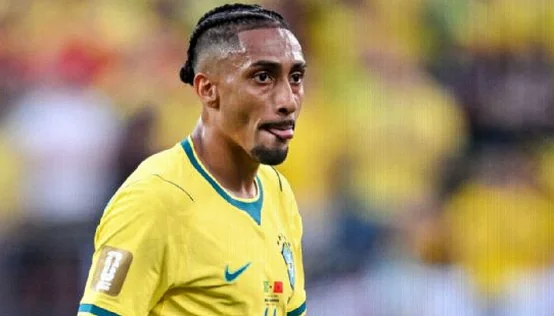
Vinícius Júnior emerges from a strong individual World Cup as an established leader of the new attack. Raphinha, meanwhile, has a major opportunity to reassert himself after an injury-hit tournament. The Barcelona winger did not reproduce the direct threat he has shown at the beginning of the LaLiga campaign while playing for Brazil, and restoring that form is one of Ancelotti’s key attacking priorities.
The broader concern lies in midfield. Brazil had less of the ball than Norway despite periods of control in their World Cup meeting, a problem Ancelotti has linked to the profile of his available players. He is content with his defensive and forward options, but wants midfielders capable of dictating possession and managing matches over the longer term.
Gabriel Bontempo of Santos, Corinthians left-footer Breno Bidon and Fluminense’s Martinelli, who is unrelated to the former Arsenal winger, are among the younger players attracting attention. Andrey Santos and Douglas Luiz have returned to contest the holding-midfield role once occupied by Casemiro. They are set to compete alongside World Cup survivors Bruno Guimarães and Danilo Santos as Brazil seek a more stable platform for their leading attackers.
Messi farewell brings Argentina’s next test
Argentina face an even more symbolic transition. Lionel Messi is due to make his final appearance for the national team against Benin in Buenos Aires on Oct. 6, ending an era in which he has been universally embraced following the country’s recent successes.
Before that farewell, Argentina will meet Bolivia and Burkina Faso in Córdoba. Those games may offer the clearest early indication of how Lionel Scaloni intends to operate without Messi, a challenge that recalls the difficult post-Pelé period for Brazil and Argentina’s own long search for a successor after Diego Maradona.
Scaloni has largely retained the group that travelled to the World Cup, with a small number of additions. The selections provide continuity for the player asked to inherit Messi’s creative role, while also functioning as a possible goodbye for the coach himself; Scaloni’s contract expires at the end of the year.
Argentina are not wholly unfamiliar with life without Messi. He started only 10 of their 18 qualifiers for the last World Cup, and Julián Álvarez was regularly used to cover the gap through his energy, adaptability and technical quality. The striker remains central to Argentina’s future, but the team are also considering specialist attacking midfield options.
Nico Paz of Como is positioned to receive a sustained opportunity. The son of a former Argentina defender has earned strong reviews for his Serie A displays, although he has made limited impact across his first 11 international appearances. Paz and Messi were difficult to accommodate together because both preferred receiving possession to feet; that issue will no longer apply.
Franco Mastantuono has started the season impressively at Fiorentina and will seek to establish himself in the international setup. Thiago Almada is another candidate once fit again. Having joined River Plate, he can now press his claim each week in front of Argentina’s domestic audience.
Brazil and Argentina have lost defining No. 10s before, but neither country will lack players eager to take responsibility. The coming fixtures are the first stage of determining who can turn that ambition into a new international era.