What It Would Take to Lift and Swing Cloud’s Buster Sword in Real Life
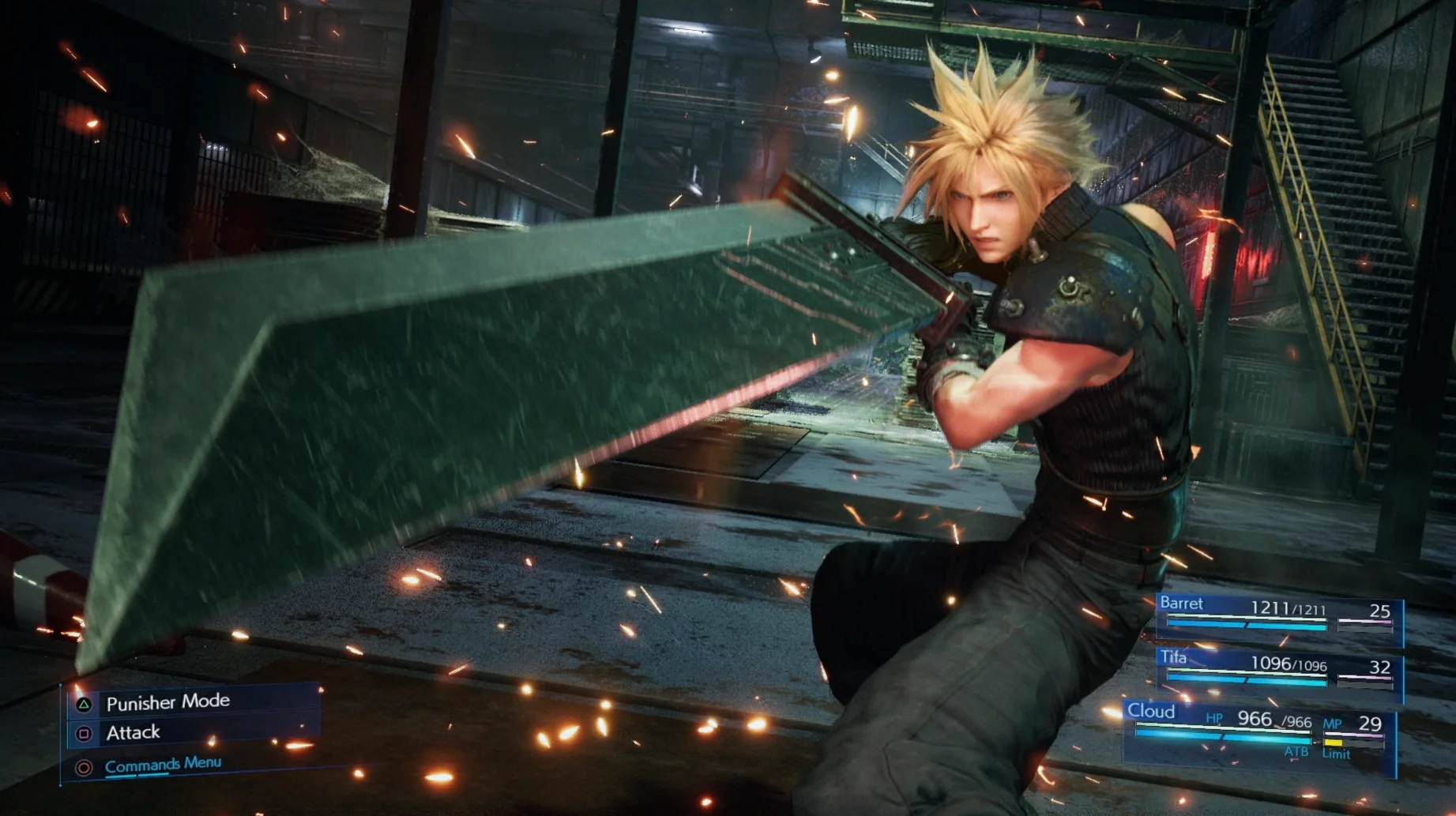
Cloud Strife’s Buster Sword is one of gaming’s most recognizable weapons—big, brutal, and built for action that ignores physics. But what happens when you try to translate that iconic design into the real world? A new breakdown runs the numbers on what it would actually take to lift and swing a “faithful” version of the weapon, and the conclusion is unambiguous: the original concept is beyond human capability, while a lighter replica only becomes “possible” at the cost of changing materials and still not matching Cloud’s impossible combat choreography.
Why the Buster Sword breaks real-world physics
The analysis starts with a familiar visual assumption: Cloud is typically shown at about 173 cm tall, and the sword is estimated at roughly the same scale—around 1.7 meters in blade length. From there, the blade dimensions are approximated using visible proportions: about 26 cm wide and roughly 4–5 cm thick.
If you treat that blade like a solid block of steel (a simplification, but useful for a baseline), you arrive at a volume of about 0.0199 cubic meters. With steel density taken as approximately 7,850 kg per cubic meter, the raw mass comes out far beyond what you could reasonably call “swingable.”
The breakdown then adjusts for the fact that the Buster Sword is not a perfect rectangular slab—real geometry would remove material, tapering, angled edges, and a non-square tip all reduce mass. Even with a conservative estimate that the sword itself weighs around 120 kg (ignoring the handle for simplicity), it still produces a major problem: the weapon isn’t just “heavy,” it’s effectively a long lever.
Because the center of gravity would sit roughly 0.8–1 meter from the hands during a horizontal hold, the rotational forces on shoulders, elbows, spine, and wrists would be enormous. The report emphasizes that Cloud’s signature style—rapid swings, frequent direction changes, stopping and re-accelerating, and even one-handed throws and aerial combo sequences—doesn’t become easier just because the sword’s weight is “only” 120 kg. The inertia and torque would amplify the physical demand far beyond simple lifting.
Could a real person ever wield anything close?
The conclusion isn’t that the idea is completely doomed—it’s that a faithful steel replica is. The analysis shifts to what would happen if the blade material changes, since weight scales dramatically with density.
Using typical earth materials, the breakdown lists approximate mass targets for a similarly sized blade (still not including the handle):
- Titanium: about 90 kg
- Aluminum: about 54 kg
- Magnesium: about 35 kg
- Carbon fiber: roughly 30–35 kg
At that point, the report argues that “liftable” and “usable in Cloud’s way” aren’t the same. Even titanium still means handling the equivalent of carrying around a person’s weight, and aluminum’s lower rigidity could reduce durability under repeated punishment. Magnesium and carbon fiber push the weapon into a range where an exceptionally strong person could theoretically swing it—at least from a pure mass perspective.
Still, the rotational challenge remains. Even if you reduce weight dramatically, a 1.7-meter blade moving quickly creates dangerous torque and requires more than raw strength: bones, tendons, and joints would need to tolerate forces far higher than those experienced by an average human.
What’s the closest “real” version? A Guinness record example
To ground the discussion in reality, the analysis cites a specific real-world attempt: a Hollywood armorer named Tony Swatton built a Buster Sword replica in 2013 and earned a place in the Guinness World Records.
That replica reportedly measured about 2.59 meters long and weighed 21.65 kg, using a blend of aluminum, bronze, and steel. The report treats this as a practical demonstration of how far material choices can drop the mass compared to the theoretical 120 kg steel model.
However, the breakdown stresses that even a 20 kg sword isn’t automatically “Cloud-ready.” You’re still swinging a very long object at speed, meaning you still have to deal with leverage and rotational inertia. In other words: the record replica makes the dream less impossible, but it doesn’t erase the physics that Cloud’s animation-style fighting comfortably sidesteps.
So is the Buster Sword ever “worth it” in the real world?
The final take is framed as a caution: without Mako-like power, trying to replicate the original steel concept is not something to attempt. Even the lightest plausible material paths sit near the edge of physical possibility, and turning the weapon into something safe enough for combat is an entirely separate challenge.
The analysis also gives the story a broader “what if” angle: if you want to be closer to Cloud, material engineering helps—but the signature feel of the Buster Sword in motion comes from more than weight. Length, torque, acceleration, and stopping forces are the real constraints.
For players and weapon-design fans, the bigger takeaway is that iconic game props don’t just look cool—they encode assumptions about how the universe behaves. When you switch from a fictional energy-and-enhancement setting to real-world mechanics, the “impossible” part isn’t the sword’s existence—it’s the choreography around it.