Nintendo and SGI’s Project Reality: The Early ’90s “Next Console” Pitch
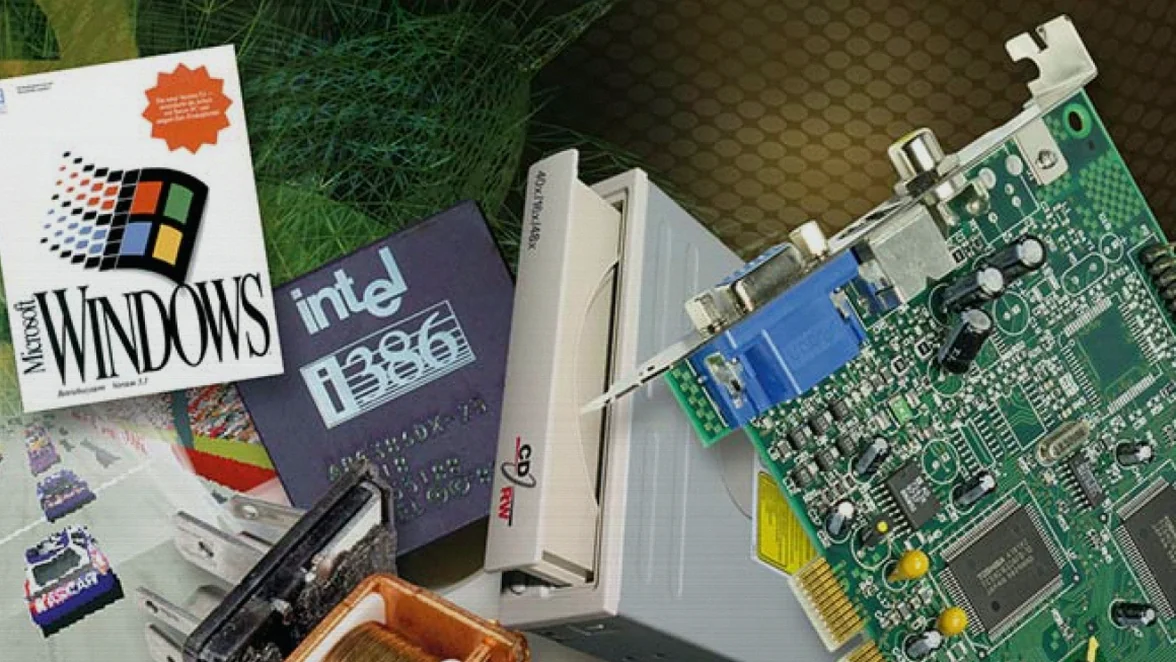
On August 23, gaming tech history hit three very different milestones—from Nintendo and Silicon Graphics teaming up on a “next console” pitch in the early ’90s, to Intel pushing the x86 clock ceiling in the 2000s, and ATI refreshing its GPU lineup with new Radeon X100-series cards in 2006.
1993: Nintendo and SGI announce “Project Reality”
On August 23, 1993, Nintendo revealed a collaboration with Silicon Graphics Inc. (SGI). The partnership centered on “Project Reality,” positioned as the next Nintendo console intended to replace the Super NES.
Nintendo’s key promise was realistic 3D graphics, with SGI contributing major hardware blocks, including the main processor and the graphics processor.
That project ultimately reached consumers in 1996, when “Project Reality” launched as the Nintendo 64.
2000: Intel demonstrates a 2 GHz Pentium 4 moment
A little over seven years later, the clock-speed arms race took another turn. After Intel’s rival AMD had pulled ahead in the “gigahertz race” about half a year earlier with Athlon processors, Intel responded with a high-profile showing at the Intel Developer Forum.
On August 23, the company presented an overclocked processor reaching 2 GHz—an eye-catching demonstration built on the Pentium 4 era.
The twist was that Intel’s prior generation was still tied to Pentium 3, which itself traced its MHz-focused roots back to the Pentium 2 era at 233 million operations per second. Intel’s new approach leaned on NetBurst, an architecture designed to support very high frequencies—an engineering bet that, in hindsight, was often described as marketing-forward.
For the Pentium 4 specifically, this date is also remembered as the moment it first crossed the 2 GHz threshold within the x86 space. Intel’s longer-term target was to reach up to 10 GHz with this design, though that plan never came to fruition.
2006: ATI expands the Radeon X1x00 lineup
In 2006, the focus shifted from CPU clocks to GPU refreshes. On August 23, ATI announced multiple new models in its Radeon X1x00 series.
- Top end: Radeon X1950 XTX based on the R580+ core, clocked at 650 MHz, paired with GDDR4 running at 1 GHz.
- Also announced: A CrossFire version alongside the X1950 XTX.
- Midrange: Radeon X1650 Pro as the successor to X1600, running at 600 MHz with RAM at 700 MHz.
- Entry level: Radeon X1300 XT at 500 MHz, with memory clocked at 400 MHz.