Graphic Novel Adaptation of Julián Casanova’s España Partida en Dos Arrives 2026
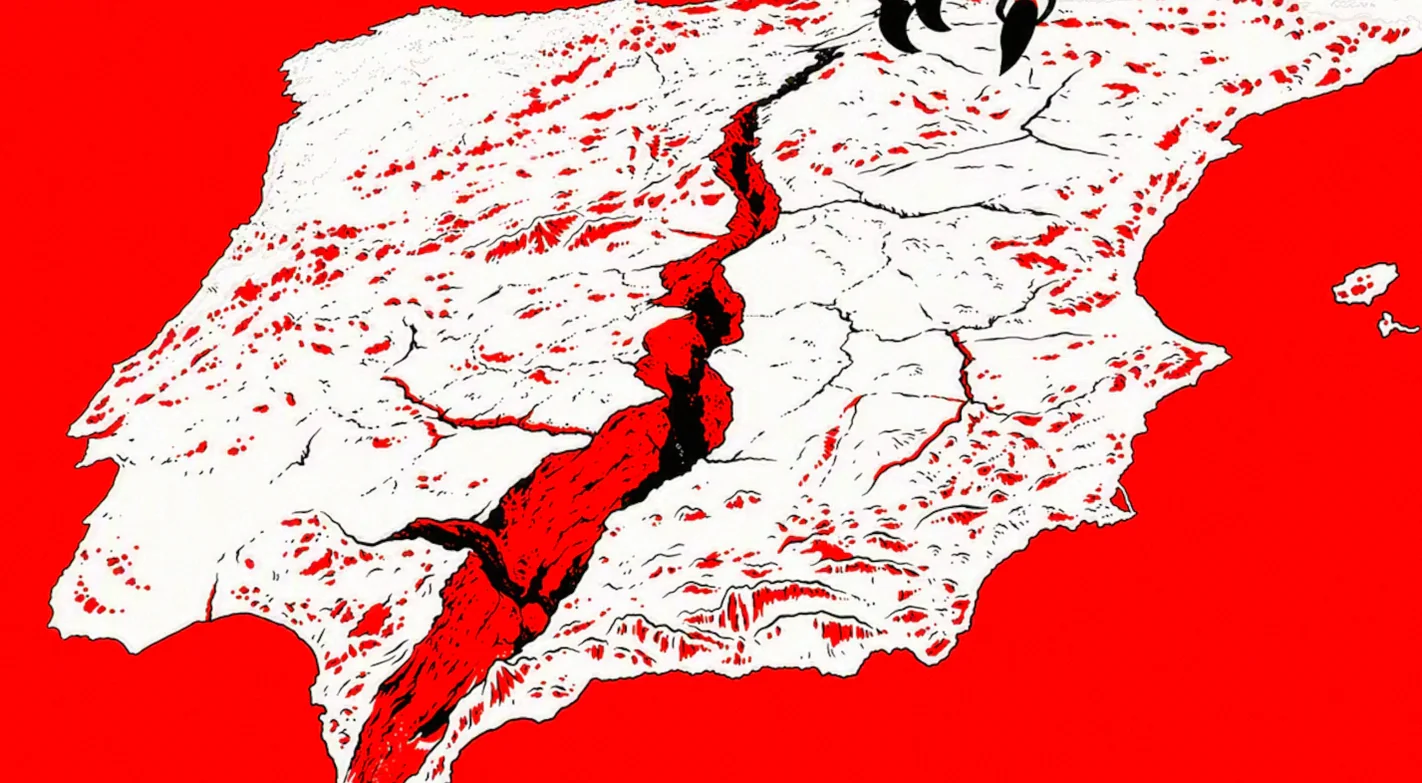
A graphic novel adaptation of historian Julián Casanova’s well-known study is set to arrive in Spain on 25 March 2026, turning the story of how the country fractured into a visually driven, classroom-friendly account of the Spanish Civil War and its aftermath. Titled España partida en dos, the book is a collaboration between Miguel Casanova and Carlos Esquembre, with Esquembre—long focused on 20th-century historical memory—bringing his documentary style to the comic medium.
What’s being adapted, and what kind of comic it is
España partida en dos adapts Casanova’s historical essay into a graphic format designed to explain the conflict rather than simply depict it. The project is authored by Julián Casanova alongside Carles Esquembre and Miguel Casanova, published by Planeta Cómic, and released as a hardcover edition.
- Format: Cartoné
- Release date: 25 March 2026
- Length: 160 pages
- ISBN: 978-84-9199-868-6
- Publisher: Planeta Cómic
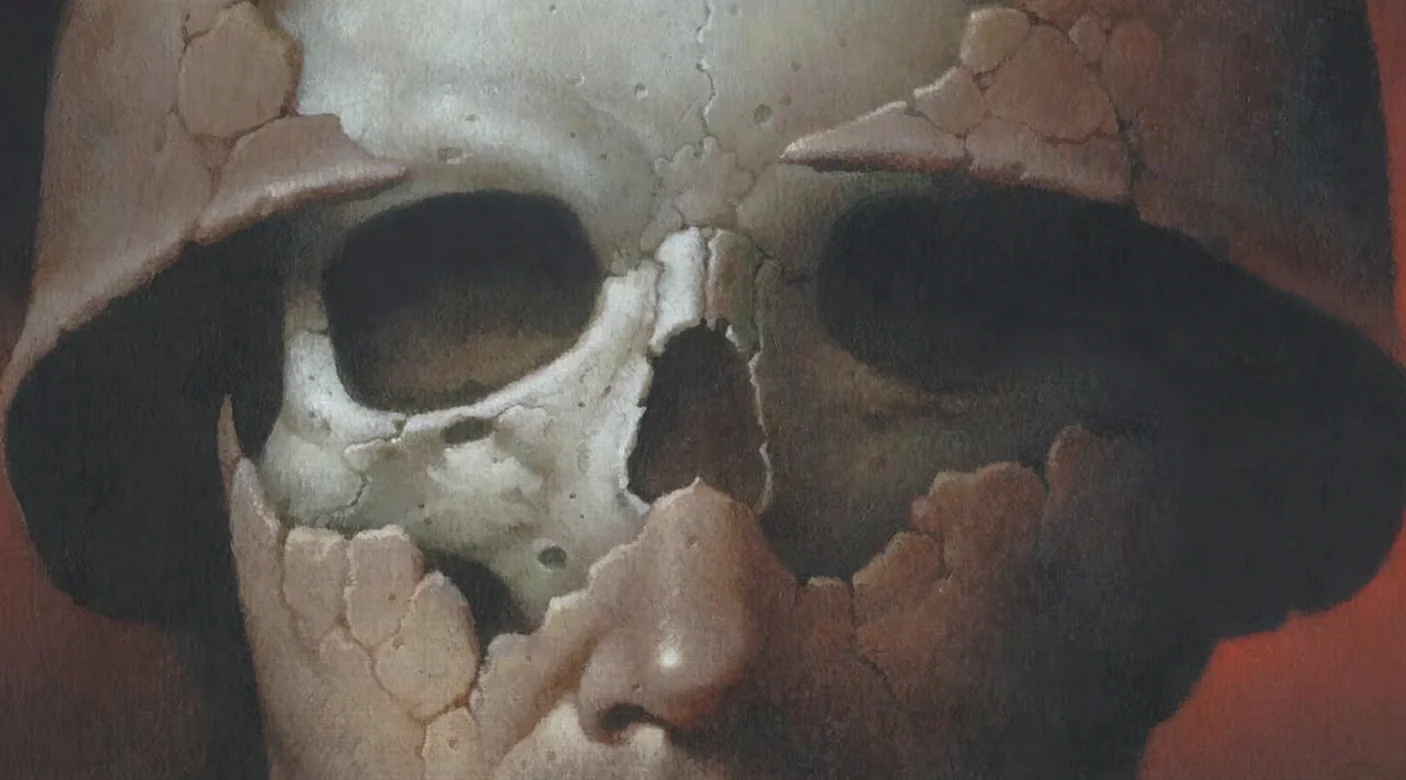
Instead of prioritizing battlefield chronology, the adaptation emphasizes ideology, political alliances, and mechanisms of power—treating military events as part of a larger explanatory framework. The opening premise starts with the exhumation of Francisco Franco’s remains from the Valley of the Fallen, then rewinds to the early years of the Second Republic to lay out the key figures and developments that led to the 1936 military uprising.
Key historical focus: politics, power, and foreign backing
The script highlights how a minority segment of the armed forces managed to challenge the elected government of the Republic—and it does so by foregrounding decisions and support structures that can get diluted in broader Civil War overviews.
- Not all of the army joined the uprising, and the book stresses how insurgents were able to act early.
- Material and logistical support arrived early from Nazi Germany and Fascist Italy.
- Early political choices mattered, including the refusal of Santiago Casares Quiroga to hand over arms to workers’ organizations—framed as a key factor in why the insurrection succeeded in some regions while failing in others.
The narrative also frames the Civil War as a conflict that quickly became entangled with wider international interests. The book points to the influence of Germany, Italy, and the Soviet Union as part of explaining how the Spanish Civil War evolved into an ideological battleground beyond Spain’s borders.
“A war within another war”
As the initial coup fails, the story expands into nearly three years of war. The adaptation underlines that the violence reached both combatants and civilians, and it does not shy away from showing repression carried out by both sides. It also makes room for internal fractures within the Republican camp, detailing political disputes that later turned into violence between groups that had initially been aligned.
How the story ends, and what the art is trying to do
The book’s conclusion addresses the long tail of the conflict: repression after the fighting, imprisonment, executions, and exile. The epilogue is presented as especially grim, aimed at showing how deeply the war fractured society—and the emotional weight of the aftermath is emphasized after the accumulation of names, events, and data.
Visual approach: realistic, documentary, and readable
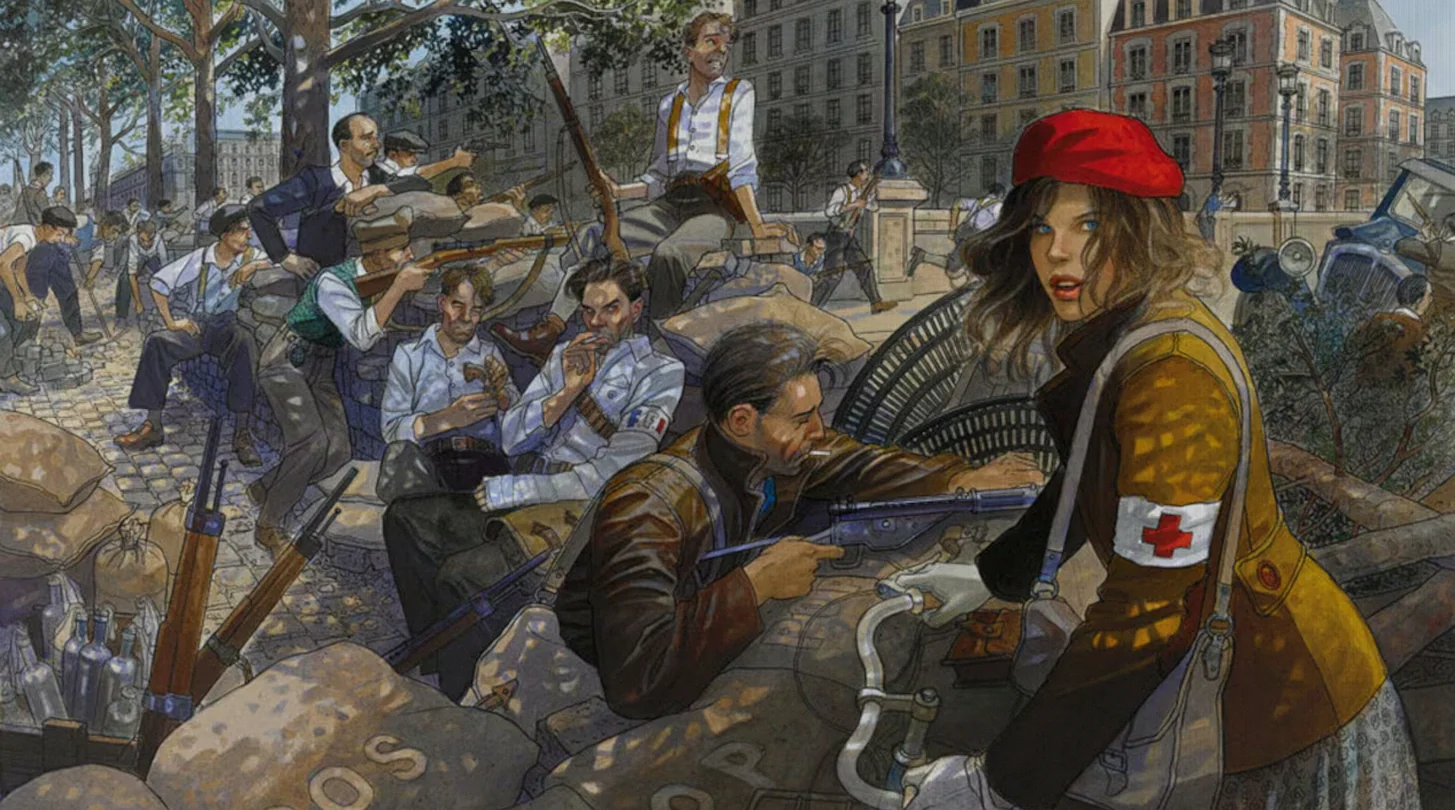
Carlos Esquembre’s art direction is described as less experimental than some of his previous works, prioritizing the needs of historical storytelling. The paneling aims to support clarity rather than draw attention to itself, using clean, organized page structures that are easy to follow. While the size of panels can change to match each scene, splash pages are also used occasionally to create visual impact without interrupting the flow.
- Uniforms, buildings, settings, and everyday details are recreated with careful attention.
- Historical characters are portrayed with strong expressiveness, helping readers identify who’s who.
- Information-dense storytelling is organized so the reading never becomes overly heavy.
Overall, España partida en dos is positioned as both a faithful adaptation of Casanova’s work and a demonstration of comics as a serious tool for public historical education: delivering the causes, development, and consequences of the Spanish Civil War in fewer than 100 pages while maintaining clarity and avoiding oversimplification.