Metroid Turns 40: How Samus and Zebes Redefined Exploration in Gaming
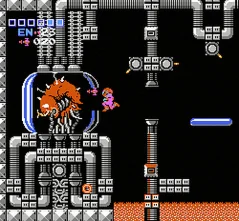
On August 6, 1986, players first touched down on the hostile planet Zebes—and the landing didn’t just kick off a new franchise, it helped reshape what video games could feel like. Four decades later, Metroid’s core ideas still echo across the industry, from the rise of exploration-first design to the broader “Metroidvania” language players use every day.
Who built Metroid—and why Samus still matters
Metroid’s first adventure was produced by hardware pioneer Gunpei Yokoi, best known for creating Game Boy. A younger Yoshio Sakamoto joined the project and helped define the series’ atmosphere, later becoming the true creative guardian of Metroid as both director and producer.
For roughly forty years, Sakamoto has been described as a steady creative compass for keeping Samus Aran at the center, protecting the series’ darker tone, and refusing to let Nintendo’s most important bounty hunter fade into gaming history. That includes the series’ biggest early shock: Samus wasn’t a male bounty hunter at all—she was a woman named Samus Aran.
For many players in the 1980s, the reveal landed like a punch. When Mother Brain was finally defeated and Samus’s helmet fell to the ground, numerous players reportedly stared at their CRT screens in disbelief. The moment arrived about a decade before Lara Croft’s debut on PlayStation’s first generation.
Quick facts
- Metroid’s first game launched in 1986, setting its tone on Zebes.
- Gunpei Yokoi produced the first adventure; Yoshio Sakamoto later steered the series for decades.
- Samus Aran’s identity as a woman was a major surprise for many 1980s players.
- Metroid’s design emphasis—exploration, upgrades, and discovery—helped define the “Metroidvania” genre.
- Super Metroid is often cited for emotional storytelling with minimal dialogue.
- Metroid Prime shifted the series to first-person using the visor scanner and environmental storytelling.
- Metroid Fusion introduced the SA-X and leaned into a more linear horror-tinged structure.
- Metroid Dread (MercurySteam) is presented as the long-awaited sequel fans had waited nearly two decades for.
Zebes without directions: the design gamble that paid off
One of the boldest choices in the original Metroid was how little it told you to do. When the game released in 1986, it placed you freely on Zebes with no clear next-step guidance—no blinking map markers, no extended cinematic sequences, and no voice directing your actions.
Instead, curiosity became the only “compass.” Each new ability opened routes that previously were out of reach, turning exploration itself into the biggest reward. That philosophy is presented as something the franchise has carried for forty years.
From pirates to predators: Metroid II and the series’ darker turn
Metroid II: Return of Samus on Game Boy changed the tone. The adventure became more shadowy, more solitary, and notably more melancholy.
The mission expanded beyond stopping space pirates, reframing the story around eradicating metroids as a species. That narrative decision is described as setting groundwork for the series’ identity that still defines it today.
Super Metroid’s lasting lesson in atmosphere
Then came Super Metroid, and it’s framed as one of the franchise’s most important releases. For many players, it remains a “crown jewel,” and it’s highlighted as a standout among the best games ever made.
The game delivered an emotional story with surprisingly few words, demonstrating how environments, music, and level design can trigger strong feelings without relying on dialogue—often associated with the idea of environmental storytelling. Even now, the game is studied by designers worldwide for its level design as much as its legacy.
How Metroid created a genre name—and spawned hundreds of imitators
Metroid’s influence didn’t stay confined to Nintendo. The term “Metroidvania” is said to be used constantly, and the “Metroid” part isn’t accidental: Metroid defined a style where exploration, upgrades, and intricately connected worlds form the heart of the experience.
From there, hundreds of games are described as drawing inspiration from the same formula. It’s less about copying characters and more about borrowing the feeling of getting stronger by learning a world.
Metroid Prime: changing perspective without losing the soul
When Nintendo introduced Metroid Prime, skepticism was widespread. Players wondered how a first-person game could capture the loneliness and exploration the series is known for, with many expecting a more traditional 3D action take starring Samus on Nintendo 64.
Instead, Retro Studios delivered a first-person adventure where the scanner visor mattered at least as much as the arm cannon. Tallon IV is described as feeling alive, with the story told through environments and the game encouraging the player to observe and read as much as to shoot.
Metroid Prime is credited with a rare achievement: it could shift perspectives while keeping the franchise’s identity intact. It’s also noted that the game has aged well, with a remastered Nintendo Switch version offered as proof of its lasting quality.
More entries, more experiments: Fusion, Zero Mission, Dread, and beyond
While Prime released, Metroid Fusion also came out for Game Boy Advance. Fusion is described as taking bigger swings toward a more linear story and introducing the terrifying SA-X, an enemy meant to constantly heighten a sense of vulnerability.
Metroid: Zero Mission is highlighted as an example of how a remake can improve the original without erasing what made it special. Later, Metroid Dread—MercurySteam’s Metroid 5—arrived as the long-awaited sequel fans had been waiting for for nearly two decades, with the franchise’s central concept still portrayed as just as relevant today.
The tough spots—and why the franchise still feels different
The road wasn’t entirely smooth. Other M divided fans due to design decisions and a narrative approach described as less elegant, and the series sometimes struggled to stay in the spotlight compared to Nintendo’s biggest franchises. Mario is often the face of the company, and Link typically draws more mainstream attention.
Metroid’s presence has been more peculiar at times—sometimes even close to forgotten—but it’s never been abandoned. That’s presented as one reason the franchise continues to feel special: it doesn’t chase trends just to chase them, and it doesn’t pad maps with unnecessary side activities (with Metroid Prime 4: Beyond noted as a small exception).
Instead, the focus stays on the same core loop: landing alone on an unfamiliar planet, unraveling its secrets step by step, and becoming strong enough to push deeper into what you don’t yet understand.
Metroid’s cultural afterimage: indie games and modern echoes
The article argues that few series trust player curiosity as completely as Metroid does, let silence and music speak as loudly, and remain as inviting as worlds where you can genuinely get lost. Even as gaming has changed dramatically over forty years, Metroid is portrayed as never losing its direction.
Traces show up across the indie scene: Hollow Knight is cited for pushing that oppressive, underground isolation to new levels. Dead Cells is referenced for combining exploration joy with fast action pacing, while Ori and the Blind Forest / Will of the Wisps and Axiom Verge are described as resonating with Nintendo’s older philosophy—down to Axiom Verge feeling like a direct love letter to the 1986 original.
Rumors point to what comes next
Finally, the piece notes a leak related to MercurySteam’s team led by Dread director José Luis Márquez. It claims the new project is called Metroid Ravenous and is close to release, and if the timeline lines up, it would correspond to the game also known as METROID 6.
This year also brought rumors of a remake of Super Metroid, though the text says some believe the updated target could have been a different classic. With Metroid’s 40th anniversary landing in 2026, the lingering question remains whether a new Metroid announcement is imminent.