Matt Damon Reveals Nolan Used a Real Cave and Practical Effects for the Cyclops
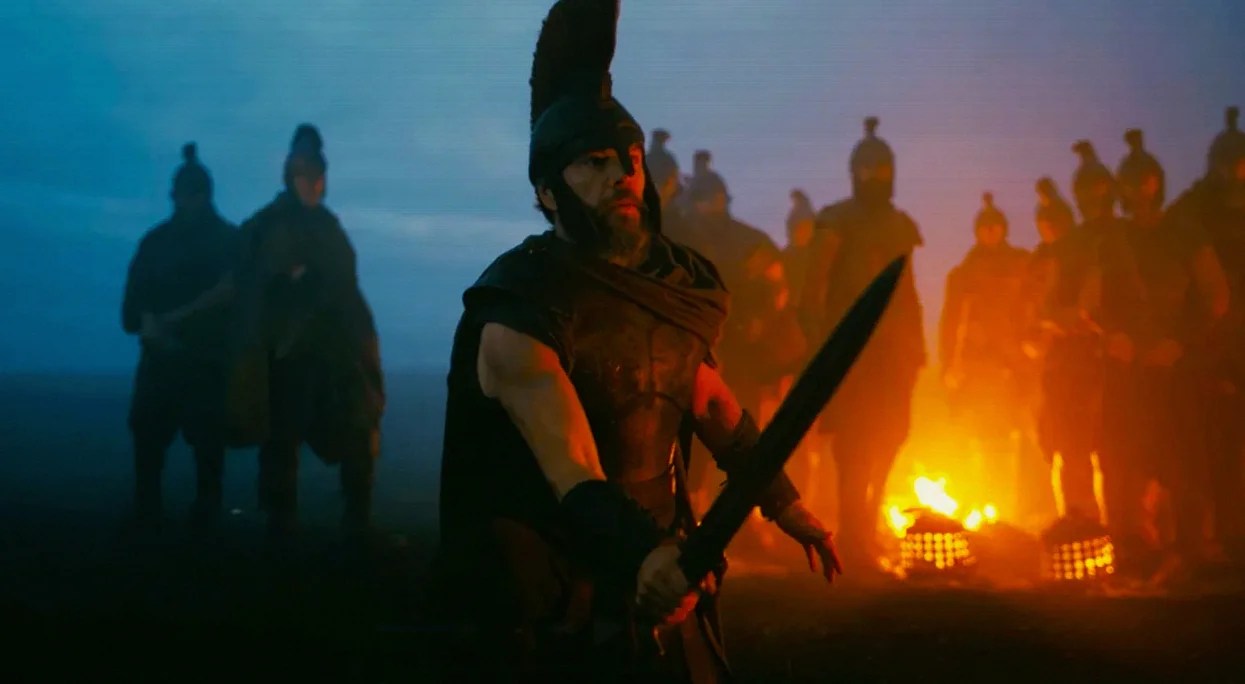
Matt Damon says Christopher Nolan’s take on The Odyssey found a way to show the Cyclops without leaning on a fully digital creature. Instead of treating the monster as a pure CGI problem, the production reportedly solved it with practical, in-camera effects—an approach that fits Nolan’s long-running philosophy of building as much as possible on set.
How Nolan built the Cyclops for real
During an appearance on the Good Hang podcast, Damon explained that the filmmakers created a physical Cyclops prop: a puppet roughly 60 feet tall. The plan, as Damon described it, was to do as much work as feasible inside the camera rather than outsourcing everything to a soundstage workflow or a green-screen pipeline.
To make that practical approach work, the team reportedly constructed the relevant set inside Psychro Cave, a real location tied to Greek mythology—traditionally associated with where Zeus is said to have been born. Damon noted that this kind of setup mirrors what a typical production might avoid, since many films would default to CGI for a creature like the Cyclops when the scale gets extreme.
As Damon put it, Nolan aims to use as few effects as possible. He also emphasized that the director understands the production environment and benefits from top-tier effects specialists who help determine what can be achieved using real-world elements during filming.
Why the practical-CGI balance matters for audiences
Nolan’s reputation is built on doing stunts and spectacle in physical ways—sometimes even when it’s harder than the digital alternative. Damon’s Cyclops anecdote continues that pattern and also answers a common question about adapting myth on a modern blockbuster budget: how do you sell something fantastical convincingly without turning every frame into a visual-effects shot?
For context, Nolan has previously pursued real-world methods for major set pieces across his filmography. He reportedly flipped a real semi-truck in the middle of Chicago for The Dark Knight, used wire work to spin Matthew McConaughey in a live-action version of the tesseract sequence from Interstellar, and recreated the blinding blast of an atomic bomb using practical effects in Oppenheimer.
That history is part of why fans have been curious about The Odyssey—whether the production could maintain Nolan’s realism while still handling story elements that usually trigger heavy CGI. Damon’s comments suggest the answer is “mostly, yes,” at least for the Cyclops.
Importantly, the director isn’t described as anti-CGI. The distinction, as Damon frames it, is that Nolan doesn’t want CGI to function as a crutch. When budgets and schedules allow, he prefers solutions that can be performed on set and captured in-camera, using digital tools to support or enhance what’s already there.
- Nolan’s team reportedly used a large physical Cyclops puppet instead of relying on fully digital creation.
- The Cyclops set was built in Psychro Cave, tying the production to a real myth-linked location.
- Damon’s takeaway is that Nolan uses CGI selectively, aiming not to treat it as the default solution.
- The Cyclops was likely a major test case for fans wondering how the film would handle myth on-screen.
The IMAX angle: a film-first technical milestone
Beyond the creature effects, Damon’s discussion also highlights another major piece of the production’s strategy: IMAX. Nolan is known for a long-standing interest in shooting an entire movie on IMAX 70MM film, and The Odyssey is framed as the project that finally lets him realize that goal.
Previously, doing so wasn’t practical for narrative dialogue scenes because the camera was too noisy. As a result, IMAX 70MM usage was typically limited to big set pieces and establishing shots. For The Odyssey, Damon says the IMAX team developed new equipment designed to reduce the sound produced by the IMAX film camera, enabling the movie to be shot 100% on IMAX film for a narrative-driven commercial release.
In other words, the update isn’t just about making one sequence look realistic—it’s about changing what “full IMAX” can mean for dialogue-heavy storytelling.
Release date: when players and movie fans can finally see it
The Odyssey will reach theaters next week on July 17th.