PSG Punish Barcelona’s High Line in Late 4-2 Parc des Princes Win
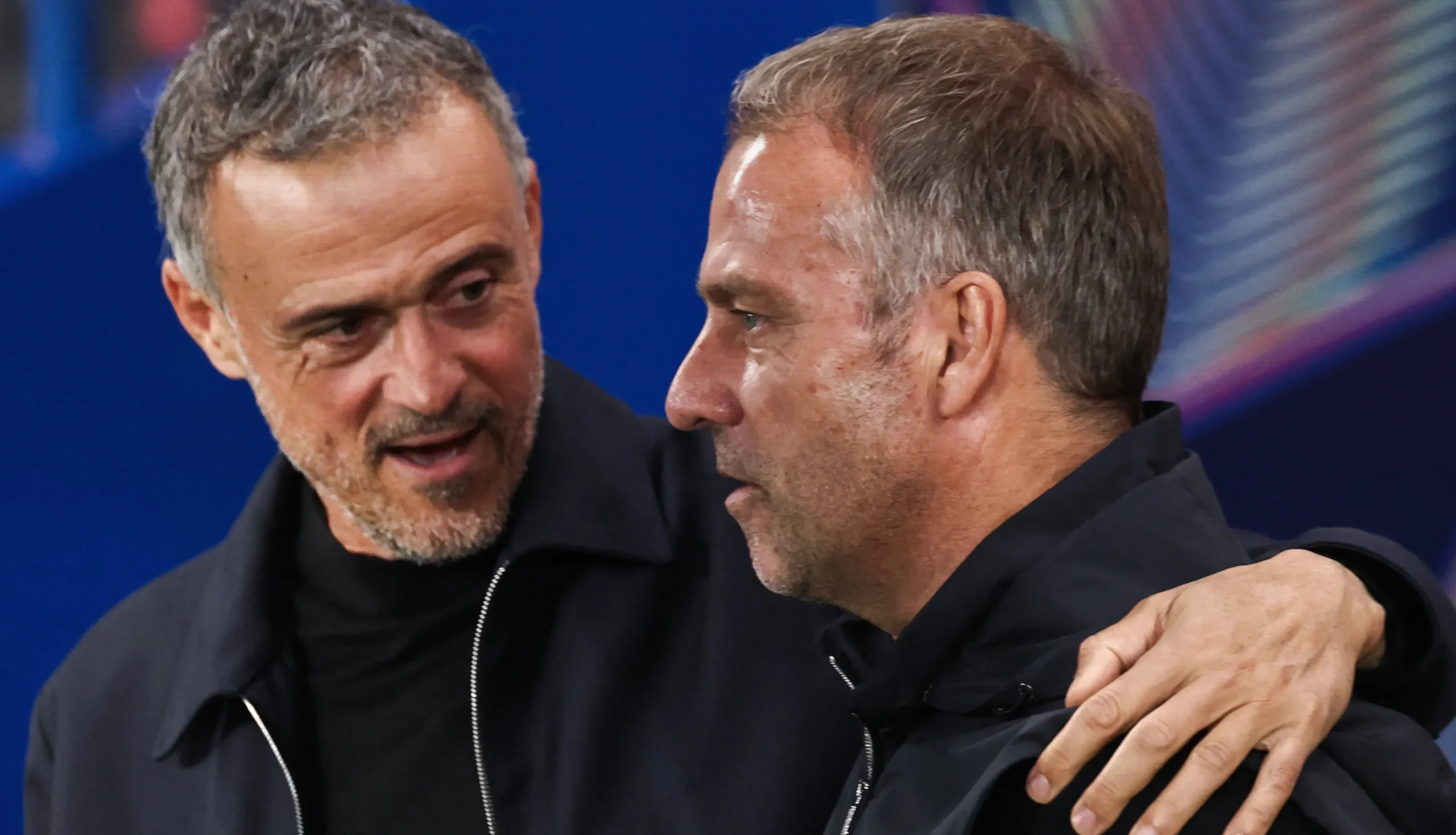
Paris Saint-Germain recovered from Barcelona’s late equaliser to claim a 4-2 victory at the Parc des Princes, turning a match of contrasting approaches with two decisive goals in the final nine minutes. Luis Enrique’s side absorbed spells of Barcelona possession, repeatedly attacked the space behind Hansi Flick’s high defensive line and finished with a markedly sharper return in front of goal.
PSG set the terms without dominating the ball
Barcelona had more of the possession, while PSG ended the game on 47 per cent, but the home side were prepared to operate without the ball. Enrique used a flexible 4-3-3, with Achraf Hakimi moving infield during possession to join Vitinha and Joao Neves. That movement gave PSG additional central support while their wide forwards remained high, keeping Barcelona’s full-backs occupied.
The approach was geared towards quick forward attacks rather than long periods of circulation. Désiré Doué provided the opening goal in the 38th minute, receiving between the lines after PSG moved through Barcelona’s press and striking from outside the penalty area.
Flick began with a 4-3-3 that could become a 4-2-3-1, with Pedri and Marc Bernal forming the central base. Bernal’s selection, with Rodri initially among the substitutes, reflected the need to manage the squad ahead of Sunday’s Clasico against Real Madrid.
- PSG registered 22 attempts and put 15 on target.
- Barcelona managed five efforts on target.
- The teams recorded the same number of touches in the opposition penalty area.
- Joan Garcia made 10 saves for Barcelona.
- PSG struck the woodwork twice, including an early Khvicha Kvaratskhelia effort and Ferran Torres’ shot against the right post in the 71st minute.
Barcelona find routes back into the contest
The visitors lost Dani Olmo during the first half, while PSG had already seen Ousmane Dembele leave in the 20th minute. Ferran Torres came on against his former club but missed a one-on-one opportunity five minutes after entering the match.
Barcelona’s response came through more patient combinations around PSG’s compact shape. Fermín Lopez, introduced before half-time, helped draw defenders into central areas before releasing Xavi Espart for the equaliser in the 55th minute.
Flick sought greater command at the hour by bringing on Rodri, Gavi and Karim Adeyemi. Rodri helped Barcelona sustain pressure and spend more time in PSG territory, but the visitors struggled to turn that territorial advantage into clear openings.
Lamine Yamal was kept very wide in an attempt to isolate Lucas Hernandez. Hernandez largely controlled that duel through physical defending and well-timed fouls, then restored PSG’s lead with a header in the 72nd minute.
Equaliser triggers PSG’s decisive response
Enrique was forced to adapt through an injury-hit evening that involved the absences of Dembele, Kvaratskhelia and captain Marquinhos. His 78th-minute double change, replacing Hernandez and Doué with Warren Zaire-Emery and Senny Mayulu, briefly altered the balance on Barcelona’s right.
Yamal took advantage almost immediately. After a poor clearance from Zaire-Emery, the winger found the 2-2 goal in the 79th minute, seemingly putting Barcelona in position to chase a winner.
Instead, PSG attacked the increasingly open spaces left by Barcelona’s advanced line. Vitinha struck a volley in the 81st minute to put the French side back ahead. Five minutes later, Hakimi reached the byline and cut the ball back for Fabian Ruiz, who finished clinically to complete the 4-2 result.
High line punished in the closing stages
Barcelona’s commitment to pressing high gave them periods of control, especially after Rodri’s introduction, but it also left the back line exposed whenever PSG escaped the first wave of pressure. As the closing stages became stretched, Barcelona’s midfield could no longer consistently cover the distances behind the press.
PSG’s willingness to concede possession proved central to the outcome. Their defensive work shifted after the interval from direct duels to blocking passing routes, while their forward play remained direct throughout. Barcelona produced sustained possession but few decisive finishes; PSG needed fewer passes to reach threatening areas and made that efficiency count when the game opened up.