Games Workshop Issues Takedowns for Tabletop Simulator Warhammer 40K 11th Mods
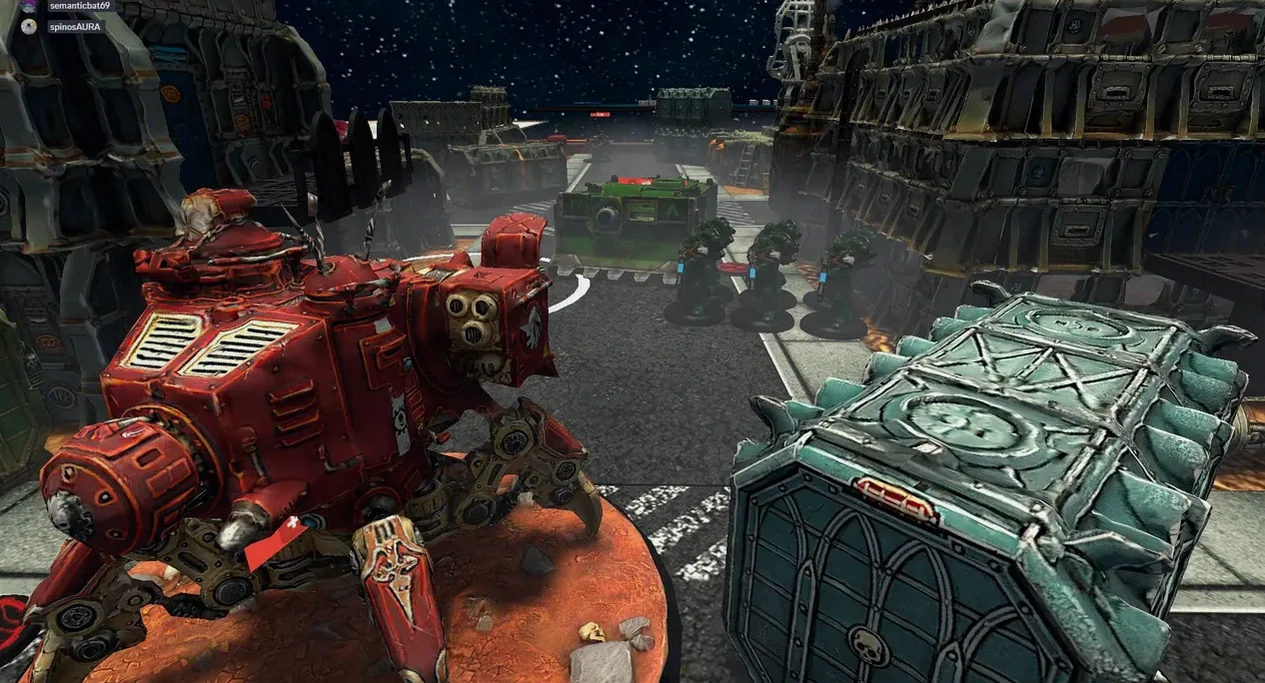
Popular Tabletop Simulator Steam mods that aim to recreate Warhammer 40,000 on the virtual tabletop have reportedly been hit with takedown requests from Games Workshop, removing at least two well-known workshop entries tied to the game’s latest rules.
What got taken down in Tabletop Simulator
Games Workshop has not publicly explained the action. However, one of the main creators behind Tabletop Simulator Warhammer 40,000 mods claims the UK publisher is responsible.
Tabletop Simulator is a long-running physics sandbox built for people to design and play their own board games in a virtual space. It launched on Steam more than a decade ago, and the platform hosts thousands of community-made mods—including Warhammer 40,000 themed content.
This week also marked the release of the 11th Edition of Warhammer 40,000, Games Workshop’s flagship tabletop property and one of the biggest launches in its recent history. The edition is sold through premium boxed sets that include miniatures, which players then assemble, paint, and use on the tabletop with the new rules and units introduced for the edition.
After 11th Edition mod updates appeared on the Tabletop Simulator Warhammer Steam Workshop, two higher-profile mods have now been removed. One creator, hutber, said they removed an 11th Edition map they posted to Tabletop Simulator just a week earlier, claiming it happened “after a request from GW.”
In a Reddit post titled “Hutber Map | TTS Map cease and desist,” hutber wrote: “Seems we’re ready for another crack down from GW, which is their right to do.” They added, “So we cannot complain of course :D.”
Another prominent mod, ForceOrg, also disappeared from Steam Workshop. A Tabletop Simulator modder using the name Seaborne said on Reddit that ForceOrg was taken down as a result of Games Workshop’s intervention.
Seaborne described the situation as grimly reminiscent of the “Dark Age Of Technology,” stating: “Those who have never subscribed to ForceOrg before won’t be able to subscribe to it now. Those currently subscribed may still be able to use these mods, but how long this will last is uncertain.”
Why now, and how players are reacting
Games Workshop has a reputation for enforcing its intellectual property through takedown requests, and in some cases by issuing DMCA notices directly. Earlier this year, IGN covered Void War, a strategy game that was described as “FTL in a Warhammer 40,000 skin.” That title was removed from Steam after Games Workshop issued a DMCA takedown, connected to an image of a shoulder pad.
Seaborne suggested the timing may be tied to the release of Warhammer 40,000 11th Edition. The theory is that some fans might choose to stick with the tabletop experience digitally rather than engage with the official hobby in an in-person way—an approach that could reduce revenue that would otherwise come from purchasing the physical sets.
Others see a different angle. Several players argue that Tabletop Simulator mods can be essential for group play—especially for people who can’t meet in person due to distance, schedules, or other real-world limitations. Some users say Warhammer 40,000 TTS mods helped them during Covid lockdowns, and that they’ve continued using the platform long after those restrictions eased.
Total War: Warhammer 40,000 Screenshots
It’s also worth putting this in context: despite the large number of Warhammer 40,000 video games, there are no true one-to-one recreations of the tabletop experience. There are strategy titles, including turn-based ones, but they don’t follow the tabletop rule set in a direct way. The likely reason is business-focused—Games Workshop does not want to provide a digital substitute that could effectively replace the tabletop, which it treats as the centerpiece of its catalog.
In that framing, Warhammer 40,000 video games are expected to offer an alternative, complementary experience rather than a direct digital clone. That approach may sound limiting given the obvious market for a full tabletop recreation, but it’s a commercially sensible strategy.
Seaborne also said the modding community has been through enforcement like this before, and that it eventually returned to the same general activity. They noted ForceOrg’s future would depend on what happens over the next 48 hours, adding: “Long-term, this is nothing but a momentarily stop gap.”
Until then, Seaborne advised other Tabletop Simulator modders to “hide, delist and create backups for your works until the coast feels clear.”