FIFA says adaptable tactics shaped the 2026 World Cup
FIFA’s review of the 2026 World Cup has found that the tournament was defined less by one dominant system than by the ability of national teams to apply sharply different plans effectively. The governing body’s 500-page technical report, released on Friday, concludes that successful sides reached their objectives through contrasting approaches rather than a single tactical blueprint.
Every one of the 104 matches was assessed through detailed video work and advanced data analysis by FIFA’s Technical Study Group and Football Performance Insights Department. Their work identified 11 major technical and tactical trends across the competition, with the report presenting its findings as an examination of how leading international teams and players are changing the game.
Different paths to tournament success
Tom Gardner, who leads Football Performance Insights, said the main shift from the 2022 World Cup was the wider range of systems used successfully. He stressed that the study was intended to document emerging patterns, rather than prescribe a formation or style that every team should copy.
Building attacks with a three-player defensive base was one of the most significant developments observed, but Gardner noted that Spain did not rely on that method. The point, he said, was that teams had shown they could make varied structures work when those structures suited their players and strengths.
The report highlighted teams that pressed high in aggressive player-versus-player setups, including systems that left three defenders against three attackers, alongside sides that defended in compact low blocks and executed that approach just as effectively. FIFA’s conclusion was that the defining feature of the tournament was tactical variety.
Among the trends identified were back-three build-up structures, rotations involving wide players, switches in the point of attack, attacking transitions, organised high pressing, defensive blocks and counter-pressing.
Cabo Verde cited for defensive organisation
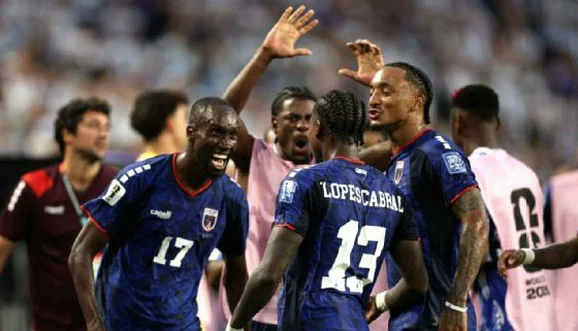
Cabo Verde were singled out as an example of how a team can challenge technically stronger opposition through compact defending, collective discipline and an active goalkeeper. FIFA said their performances underlined the value of organisation and proactive decision-making without possession.
The report described successful routes through the tournament as ranging from forceful pressing schemes to disciplined deep defending and fast transition play. It found no evidence that one of those approaches provided an automatic advantage over the others.
Expanded use of tracking and match data
FIFA said its Data Collection Unit captured football-specific actions, interactions and phases that are not generally available through standard industry datasets. That information was combined with highly precise tracking of players and the ball to assess positioning and movement throughout matches.
The intention was not only to record events, but to establish how they developed and the reasons behind them. FIFA said the process allowed the study group to connect on-pitch outcomes with the positioning, movement and decisions that produced them.
Arsene Wenger, FIFA’s chief of global football development, said elite football continues to change as new concepts emerge and established principles are altered. He added that ideas developed by one team can affect the game well beyond a single competition, making it important to identify and share those developments with the wider football community.