Epyx’s California Games: The Story Behind a Late-’80s Sports Hit
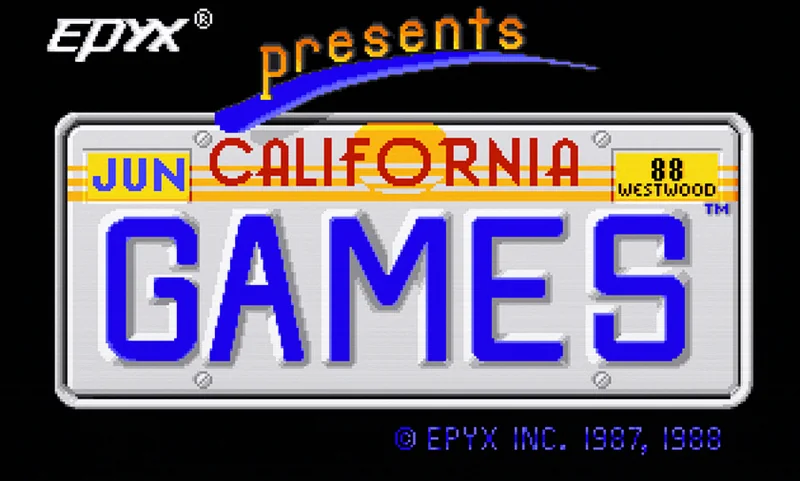
California Games remains one of the most fondly remembered sports games of the late 1980s—even if it wasn’t always the flashiest title in its genre. Developed by Epyx, it captured a very specific moment in gaming culture, bringing “street” sports into living rooms with a bright, casual vibe, and it became one of the company’s biggest commercial hits before Epyx’s rapid collapse a few years later.
Key takeaways
- California Games first released in 1987 on platforms including the Commodore 64, ZX Spectrum, and Amstrad CPC.
- Epyx built the game between 1986 and 1987 with a 12-person internal team that took roughly nine months.
- Mark Cerny, working for Sega in Tokyo, was tasked with adapting the game for the Sega Master System.
- The game sold about 300,000 copies in its first nine months and reached roughly 500,000 by late 1989.
- Despite later re-releases and a 2008 Java entry called California Games X, the original remains regarded as Epyx’s last true sports classic.
A sports game built for “street” energy
Epyx, Inc. had already found major success with Summer Games, Winter Games, and World Games—sports titles that leaned toward “serious” competition. In the 1980s, however, a shift took hold among younger players, especially in the United States: interest grew in more alternative sports that felt playable in real-world streets and alleyways.
To match that trend, Epyx reused the structure and concept of its earlier Games series but reframed the experience around a relaxed “beach” atmosphere. Visual style and music were designed to give California Games a stronger personality than the studio’s more traditional sports releases. Epyx also emphasized that both boys and girls were finding the same “street” sports concept appealing during discussion groups ahead of launch, positioning the game with a potentially broad audience.
Where it launched, what it included, and why adaptations differed
California Games debuted in 1987 across home platforms including the Commodore 64, ZX Spectrum, and Amstrad CPC. The following year, it expanded to the Atari 2600, Commodore Amiga, and PC-DOS. In 1989, it also made its way to the Sega Master System, with the game later appearing on many additional platforms through multiple publishers.
Across its lineup of disciplines, California Games featured six events: surf, skateboarding in a half-pipe, roller skating, BMX, frisbee, and footbag (Hacky Sack). Content varied depending on the version. The Sega Genesis version omitted the frisbee event. Meanwhile, the Atari 2600 and Atari Lynx versions also lacked both frisbee and the half-pipe skateboarding test.
A notable design choice was the use of real sponsorship branding at the start of play, rather than selecting a country to represent like earlier entries in the series. Epyx secured agreements with brands including Santa Cruz Skateboards, Casio, Kawasaki, Ocean Pacific (OP), and Costa Del Mar, helping the game feel more directly connected to the interests of players already familiar with those names.
Inside Epyx: a faster team for a niche of sports mini-games
Development was handled internally at Epyx during 1986 and 1987. A team of 12 people spent about nine months completing the project, which was large compared to typical single-developer efforts, or small teams of three to five, that were more common at the time.
Each programmer worked on a specific discipline. For example, the surf component was built by a real-life surfer, while the footbag/Hacky Sack portion was created by Ken Nicholson, who later developed DirectDraw—an eventual foundation for Microsoft’s DirectX technology.
For the Master System and other ports, Sega held the rights to adapt the game for that platform. Other releases were handled across different publishers and systems; over the years, California Games was distributed by nine publishers across at least 18 platforms.
Mark Cerny’s Sega Master System adaptation
For the Sega Master System version, Mark Cerny—then working as a programmer and game designer for Sega in Tokyo—was assigned the adaptation of California Games. Cerny initially didn’t expect the port to be difficult, estimating about three months of work, though the project took more than twice that.
His team consisted of Cerny himself, an art director, and a lead/project planner. They used the Commodore 64 version as a base for the Master System build. Unlike some other versions, the Sega Master System edition included all six original sports, and it was viewed as one of the strongest releases alongside the Commodore 64 version.
Sales peak, then Epyx’s collapse
Commercially, California Games became one of Epyx’s best-selling titles. Approximately 300,000 copies were sold within the first nine months. By the end of 1989, sales had climbed to about half a million, surpassing the sales of Summer Games, Summer Games II, Winter Games, and World Games.
Many players later described California Games as Epyx’s final “real” sports classic. The sequel, California Games II, released in the early 1990s for platforms including PC-DOS, Commodore Amiga, and Atari ST, but it never matched the original’s success.
After California Games, Epyx faced serious financial trouble. Stephen Landrum, a programmer who worked at Epyx for many years, attributed the decline to the company spreading itself too thin and trying to cover too much at once. The studio also attempted to expand beyond software into accessories and an ambitious handheld console project internally called “Handy.”
Epyx presented the Handy concept to industry professionals in January 1989, but it lacked the funds to produce the device alone. Nintendo declined to join the project; around the same time, Nintendo’s Game Boy launched a few months later in April 1989. Eventually, Epyx and Atari reached an agreement where Atari would handle production and Epyx would develop games. The handheld was later renamed the Atari Lynx, featuring an (at least planned) color LCD display.
However, Epyx struggled to meet its part of the Atari agreement, which contributed to Atari withholding key payments. After California Games launched in 1987, Epyx had more than 200 employees; two years later, that number dropped to fewer than 20. In 1989, Epyx shifted away from home computer development for systems like the Commodore Amiga and Atari ST and focused on Lynx game development, but only produced a small number of titles.
In October 1989, Epyx entered bankruptcy, effectively ending Epyx, Inc. a little over two years after California Games released. The brand later continued as Epyx Games, and licenses for its intellectual property remain available—for instance, if someone wants to build a new California Games.
Releases after the original
Long after the company’s fall, California Games still appeared in multiple versions, including releases for PC and Android that were described as unfortunate. A separate effort called California Games X launched in 2008 for Java, shifting the concept toward quick-time events during sports disciplines and not resembling the original gameplay.
Even with these later detours, California Games endures as a snapshot of Epyx at its peak—an instance where the studio correctly identified its audience and delivered a game that stuck.