Bryan Mbeumo Scores but Manchester United Held by Leeds at Elland Road
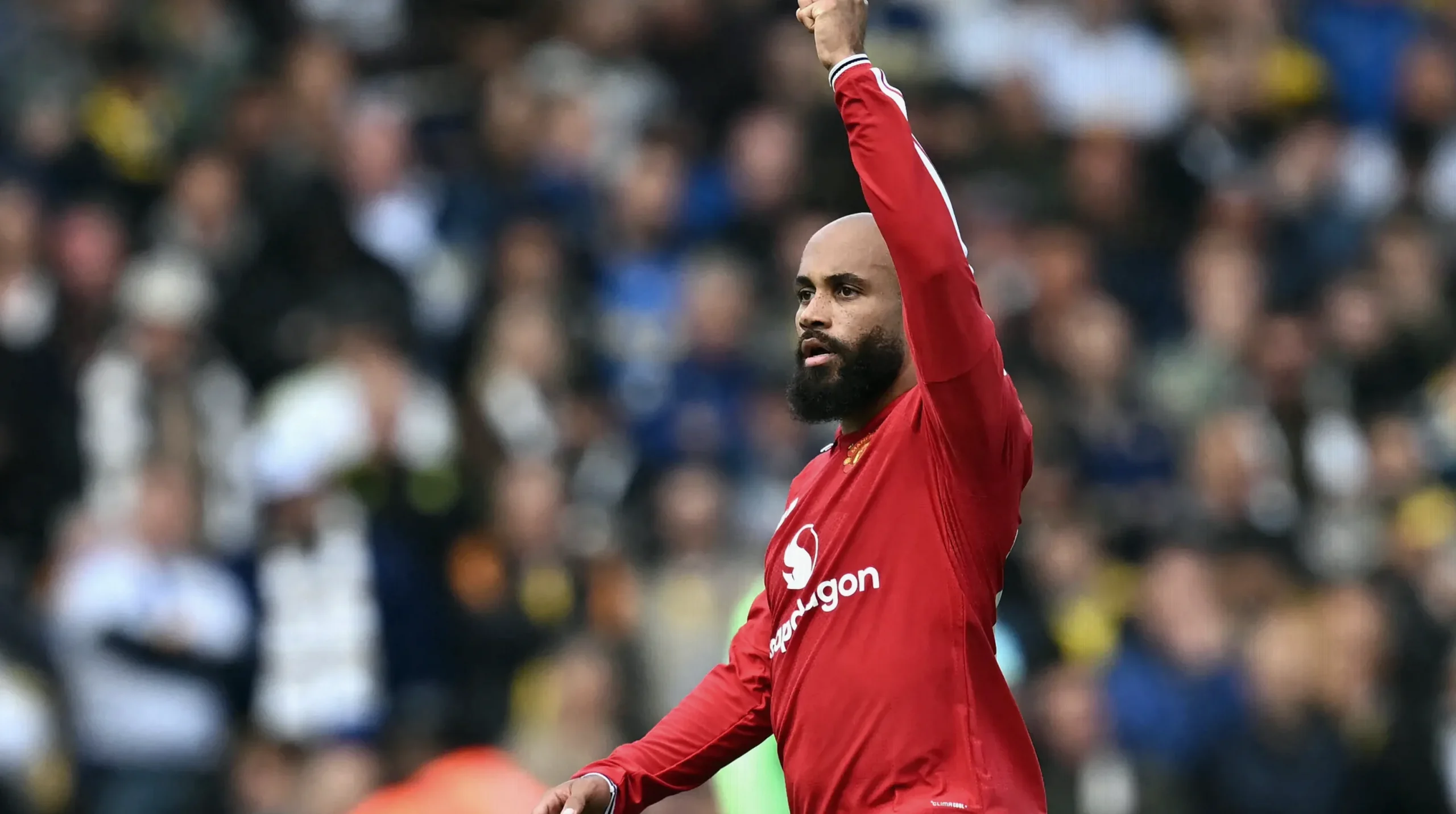
Manchester United left Elland Road with a 1-1 Premier League draw after Bryan Mbeumo’s first-half finish was cancelled out by Dominic Calvert-Lewin, a result that underlined the limits of Michael Carrick’s counter-attacking approach. United produced moments of quality through Youri Tielemans and Mbeumo, but Leeds’ territorial control prevented the visitors from building on their advantage.
Leeds control possession after United strike first
United went ahead in the 35th minute when Tielemans released Mbeumo with a precise pass and the forward converted clinically. It was the clearest example of Carrick’s intended route to goal: absorb pressure, break quickly and use Mbeumo as the attacking reference point.
That plan brought a goal but not sustained control. Leeds had 61% possession and repeatedly pushed United back, particularly after the interval. Calvert-Lewin equalised six minutes into the second half, finishing after Tarik Muharemovic had exposed uncertainty in the United defensive line.
United finished with 13 attempts, yet struggled to create the urgency or quality required to find a second goal. Their four counter-attacks largely ran through Mbeumo, while the shortage of possession left Amad Diallo with extensive defensive work and few opportunities to isolate defenders.
| Match figure | Leeds | Manchester United |
|---|---|---|
| Possession | 61% | 39% |
| Shots | Not stated | 13 |
| Crosses | 29 | Not stated |
| United defensive actions | — | 33 clearances, 14 interceptions |
Turning points at Elland Road
- Bruno Fernandes was booked in the 17th minute after a tactical foul, restricting the captain during a demanding midfield contest.
- Tielemans created the opening goal for Mbeumo in the 35th minute, giving United an advantage against the run of much of the play.
- Calvert-Lewin restored parity in the 51st minute after Muharemovic created the opening and United’s defensive structure gave way.
- Carrick replaced Lisandro Martinez with Noussair Mazraoui at half-time, then introduced Mason Mount for Carlos Baleba on 74 minutes and Matheus Cunha for Tielemans in the 84th.
Back three withstands pressure but cannot prevent equaliser
Goalkeeper Senne Lammens made three saves and handled a heavy aerial workload with Leeds sending 29 crosses into the box. He generally commanded his area well, although Leeds’ aggressive press occasionally forced hurried distribution. The clean sheet escaped him, however, as United were unable to close the spaces around the decisive second-half move.
Lisandro Martinez had a difficult first half before his interval withdrawal. The Argentine attempted to carry the ball out from deep but found Leeds’ forwards physically demanding in the air, and Carrick’s change was designed to give the side greater defensive security in transition.
Mazraoui brought a more conventional defensive presence after replacing Martinez. He helped United through Leeds’ strongest spell after the equaliser, although his impact in the attacking half was limited.
Harry Maguire was heavily involved in a defence that made 33 clearances. He won important duels amid sustained Leeds pressure, but the unit as a whole failed to hold its shape when Calvert-Lewin scored. The teenage defender alongside him contributed recovery speed and anticipation as United registered 14 interceptions, though he too was tested by the movement of Calvert-Lewin and Noah Okafor.
Diogo Dalot spent much of the match pinned into a defensive role by Leeds’ wing-backs. That curtailed his ability to join attacks, leaving United without one of their usual wide supporting options.
Midfield battle leaves United short of control
Fernandes worked hard without being able to impose his preferred rhythm on the match. His early caution added another complication, but his defensive contribution remained important as Leeds circulated the ball through midfield.
Andrey Santos also collected a late yellow card and competed forcefully, though the combinations between Ao Tanaka and Anton Stach frequently moved beyond him. Baleba supplied athletic cover for 74 minutes, making useful clearances and protecting the spaces behind advancing wing-backs before Mount was introduced to add more invention.
Tielemans was United’s calmest distributor and the central creative figure in the move for Mbeumo’s goal. His influence diminished following the break as Leeds increased their command of the ball, and Cunha’s late arrival gave him little time to change the game.
Mbeumo provides threat, but United lack a second route to goal
Mbeumo was United’s most effective attacker, finishing decisively for his 35th-minute goal and remaining their principal outlet on the break. With limited service once Leeds took charge, he was unable to convert his threat into a second decisive chance.
Diallo endured a quieter afternoon, rarely receiving the ball in favourable one-versus-one situations. His defensive duties reflected the balance of the contest, while Mount and Cunha were unable to alter its direction from the bench.
- United’s counter-attacking plan produced the opening goal, with Tielemans and Mbeumo combining effectively.
- Leeds’ 61% share of possession kept Carrick’s side under extended pressure and reduced their attacking control.
- The half-time introduction of Mazraoui improved defensive stability, but did not solve United’s shortage of ideas in possession.
- The draw leaves Manchester United 13th in the Premier League after seven matches.
Carrick will take encouragement from the efficiency of the first-half transition that led to Mbeumo’s goal, but the overall performance showed a side still struggling to control matches without the ball. Leeds dictated too much of the contest, and United could not recover momentum once Calvert-Lewin had levelled.