Berserk’s Post-Miura Era Reaches a Devastating Low Point in the Latest Chapter
For decades, Berserk has been treated as the benchmark for seinen manga—immaculately detailed artwork, confident storytelling, and a slow-burn descent into brutality that still managed to leave a thin thread of optimism running underneath the darkness. That legacy was built by Kentaro Miura’s magnum opus, but his sudden death in 2021 forced the series into a new era. The long-time collaborator and fellow manga creator Kouji Mori—assisted by Studio Gaga—took over the work, and while the franchise continues on, many readers feel it hasn’t matched Miura’s exact touch.
Mori’s stretch on Berserk has often been criticized for feeling rushed, with dialogue that doesn’t land as sharply and visuals that, although still technically strong, don’t reach the same heights as Miura’s own. The argument in defense is that the compromise was necessary to keep the story moving forward. Still, Berserk has now landed on what critics are calling a new low with the release of Chapter 385, a chapter that many fans believe effectively derails Guts’ story direction and undercuts themes Miura spent more than 30 years establishing.
On top of the online debate about the manga’s direction, there’s also a separate piece of news for collectors: Good Smile Company has re-released one of its most popular Berserk figure offerings. Fans who want this second run will need to move quickly, since these reissues tend to sell out fast.
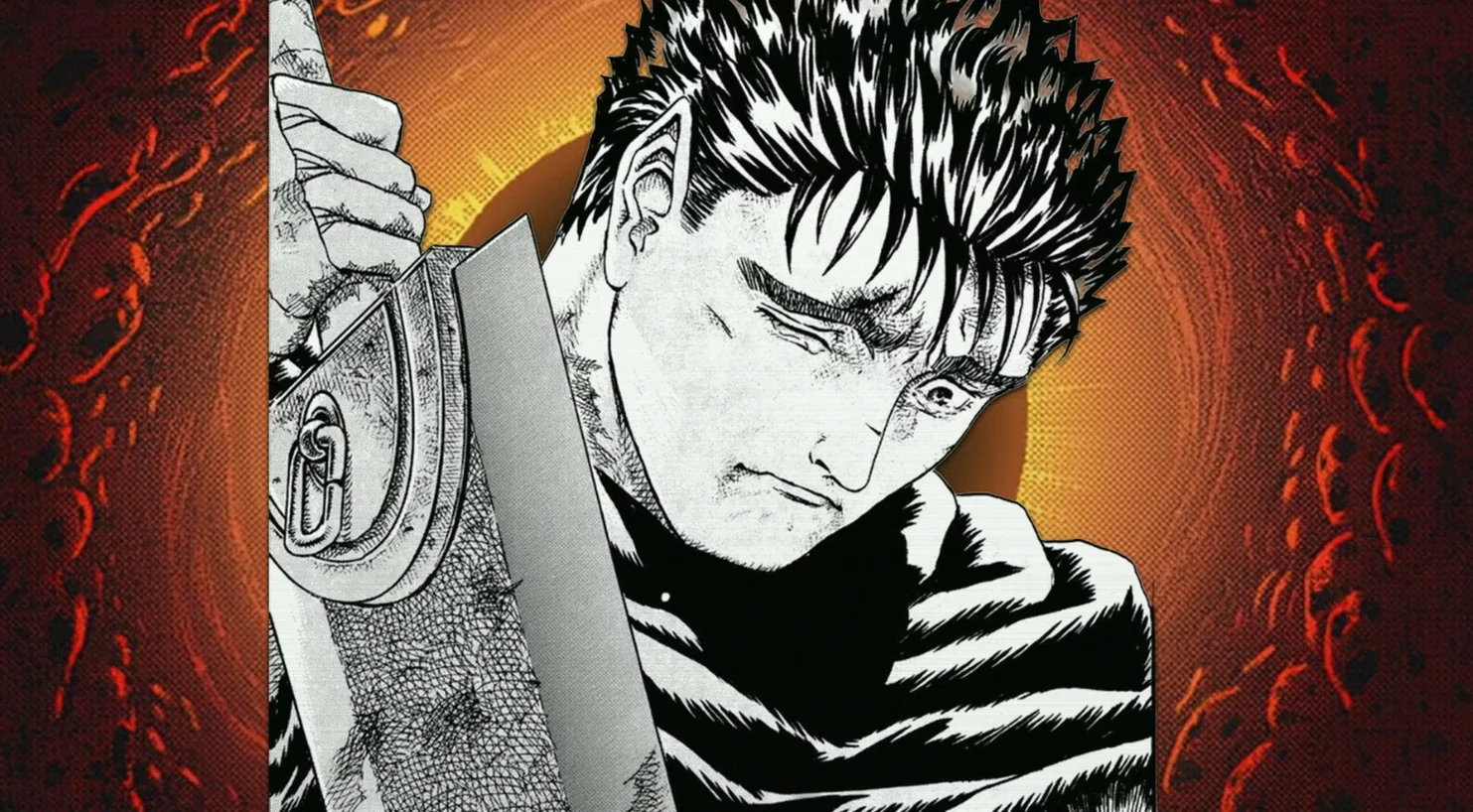
Berserk Chapter 385 Destroyed The Most Interesting Thing About Guts
Guts was never presented as an everyday person—his strength and relentless drive are exactly what you’d expect from a protagonist in a dark fantasy action series where surviving often requires going beyond normal limits. What made him stand out, though, was that his “difference” didn’t come from a noble bloodline or a special destiny. Instead, the story frames him as someone cursed by fate, positioned outside of ordinary causality.
Chapter 385 changes that framing in a way that many readers see as fundamentally breaking the logic of the series. The chapter suggests that because Guts is born from a corpse, he exists between the living world and the Astral World. On its face, the change doesn’t align with the established rules: if Guts truly existed in that in-between space associated with the Interstice, then he would have been exposed to ghosts, demons, and monsters long before he received the Brand. Beyond the internal consistency problems, the bigger complaint is tonal and thematic—Berserk now behaves as though Guts is a destined superhuman meant to defeat Griffith, with the two men connected by fate rather than the complicated friendship they built and later lost during the Golden Age Arc.
The series is also positioning itself as if the endgame is finally within reach—yet there’s a catch.
Even more damaging to readers’ sense of continuity is the way Chapter 385 appears to erase the consequences of Guts’ earlier life. Whenever Guts uses the Berserker Armor, he sacrifices pieces of himself, and over time he has been losing his senses of taste, touch, and sight. Those losses aren’t just side effects; they represent a major theme about paying a personal cost to pursue revenge against Griffith. Just as importantly, it connects to a recurring idea in Berserk: actions carry real weight, and choices leave lasting marks.
With Chapter 385, that theme—at least in practice—seems to be undone. After being sealed away and learning about his destiny, Guts is suddenly healed of nearly all his wounds. He still has injuries tied to the Eclipse, but the damage he took from using the Berserker Armor is gone. Several scars are healed, his vision is restored, and he can access superhuman strength even without relying on the Berserker Armor. In the span of a single chapter, critics argue, Guts shifts from being one of the most compelling protagonists in fiction into something closer to a generic power-up character.
Berserk Has Officially Jumped the Shark & There’s No Fixing It
Right now, Berserk is being described as shameful by those who’ve been following the series closely. The argument is that the manga has “jumped the shark” by retconning a major component of Guts’ backstory. Kouji Mori has claimed that Kentaro Miura wrestled with this plot development for years, but critics say that doesn’t make the change feel like it belongs to Miura’s vision for the character. They argue that turning Guts into a functional, hero-like superhuman directly clashes with everything that’s defined Berserk—both in tone and in the themes that have anchored the story for so long.
The manga is also viewed as accelerating toward its endgame in the worst possible way. For many readers, the situation is beyond repair: Guts and Griffith are linked through faith, Guts’ injuries are largely healed via what feels like magic, and the series rushes past the kind of slow, meaningful character development that could have been unforgettable. That criticism is aimed particularly at Chapters 384 and 385, which set up a deep dive into Guts’ inner self and then replace that analysis with a generic opportunity for escalation instead of truly examining who Guts is.
Even with the broader consensus that Berserk has felt like a shell of its earlier self since Miura passed away, the two most recent chapters are being treated as the clearest evidence that the series should have ended with Chapter 364.
Berserk
Cast
- Nobutoshi Canna — Guts (voice)
- Toshiyuki Morikawa — Griffith (voice)