Graphic Novel Review: Stalingrado. Cartas desde el Volga Brings Stalingrad Alive
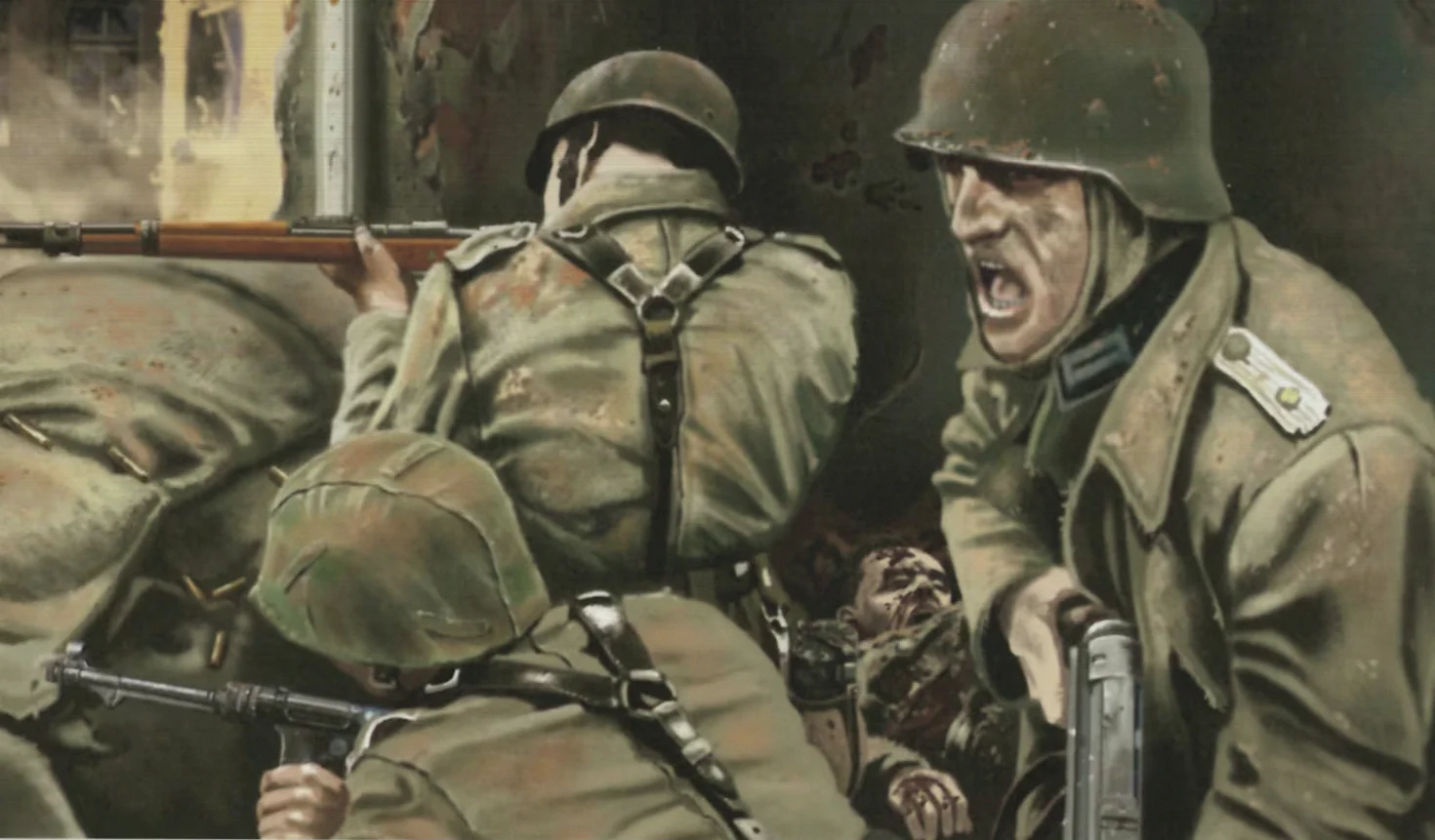
A new graphic novel titled Stalingrado. Cartas desde el Volga from authors Daniel Ortega y Antonio Gil revisits one of the defining turning points of the Eastern Front, using soldiers’ letters to put a human face on a battle marked by unparalleled destruction from July 1942 through February 1943.
Why Stalingrad mattered—and why it was unlike anything before
Stalingrad is remembered as the fight that shifted the direction of the war on the Eastern Front. While other clashes before and after were larger in scale, the conflict in and around the city became infamous for the level of violence and devastation it produced during the seven-month span between July 1942 and February 1943.
- The city, located on the Volga and bearing Stalin’s name, was home to nearly half a million people before the fighting intensified.
- German air attacks reduced the city to rubble, followed by artillery fire from both sides.
- The aftermath culminated in extreme house-to-house fighting, turning streets into battlefields.
Ortega and Gil’s approach: letters, visuals, and context
Daniel Ortega, a specialist in military history, previously tackled the episode in Stalingrado. La historia gráfica (2018). For this new work, he returns to the same battlefield—now paired with Antonio Gil, one of Spain’s standout illustrators in historical and war-focused comics.
- Ortega and Gil previously collaborated in 2023 on La primera escuadrilla azul, a graphic novel about Spanish volunteer pilots who flew missions of escort, reconnaissance, and defense on the Eastern Front.
German letters as the narrative spine
The key narrative decision in Stalingrado. Cartas desde el Volga is Ortega’s choice to anchor the story in letters written by German combatants. The book is positioned as a risky but ultimately successful storytelling method that steers away from a purely academic tone.
- The epistolary format lets readers “look up close” from the perspective of those living through hunger, cold, wounds, and daily uncertainty.
- The letters trace how early optimism collapses into exhaustion, resignation, and growing fear that defeat is becoming inevitable.
- The comic uses these testimonies to emphasize that real people—writing to reassure family members, confessing fears, or trying to preserve a fragile sense of normality—were at the center of the fighting.
Visual fidelity with cinematic scale
On the art side, Gil’s work is highlighted for both its documentary precision and its ability to communicate scale. The book depicts tanks, vehicles, rifles, aircraft, light weapons, and artillery with high detail, aiming to keep technical accuracy while pushing expressive impact.
- Uniforms, vehicles, weapons, and settings are described as carefully documented.
- The comic alternates quiet, intimate moments with sweeping panoramas that underline the immensity of the disaster.
- Destroyed factories, collapsed concrete skeletons, streets covered with corpses, and columns of smoke are used to make the ruined city feel like an active presence in the story.
Balancing battle history with human stakes
The graphic novel also interleaves explanatory text pages that outline the military situation during each phase of the campaign. These sections are presented as crucial for context—helping readers follow the personal stories that unfold in the panels.
- The narrative begins by framing the German ambition to dominate southern Russia, push toward the Caucasus, and control strategic resources.
- It then follows how Stalingrad becomes a deadly trap, integrating major elements of the campaign into the flow.
- Key events and locations included in the retelling are the arrival of Paulus at the Volga, the resistance led by the 62nd Army under Chuikov, fighting over enclaves such as the House of Pávlov, the Mamayev Kurgan hill, and the industrial sector.
- The later turning point is tied to Operation Uranus.
As the weeks progress and the German situation deteriorates, the book’s tone shifts toward pessimism, and the artwork is described as moving from the brightness of summer into a colder, darker palette. Visual relief comes when the action leaves the city for snowy landscapes beyond Stalingrad, where Soviet offensives eventually break the resistance of German and allied forces.
More than soldiers versus soldiers: the invisible enemy and the endgame
One of the graphic novel’s most distinctive claims is that the “enemy” was not limited to the opposing army across the front line. Hunger, cold, disease, lack of supplies, and despair are treated as daily forces that punished both soldiers and civilians.
- The book emphasizes that many casualties resulted not only from combat, but from poor logistics, medical systems overwhelmed by demand, and soldiers lacking the gear to survive extreme temperatures.
- Cold, typhus, dysentery, jaundice, and malnutrition are listed as lethal threats as real as artillery or snipers.
Soldiers, not generals
Although the story passes through major historical figures—including Paulus, Chuikov, Zhúkov, Manstein, and Hoth—the work is framed as not being about generals. The spotlight is instead on anonymous men who write letters to their families from the front.
- The emotional core comes from those Hans, Rollo, and others who never returned to their wives, children, or parents.
- Maps and included positioning information are described as helping readers understand the complexity of a battle with many moving parts.
- Ortega avoids historiographical arguments over whether particular decisions were strategic mistakes or unavoidable sacrifices, focusing instead on events and—most importantly—the human consequences.
The final price of Stalingrad
The closing stretch of the battle is treated with particular severity. The account moves through the German VI Army’s encirclement via Operation Uranus, Manstein’s failed relief attempt, and the inability to supply trapped troops by air. It culminates in outcomes that are described as almost funereal in tone.
- Paulus surrenders on January 31, 1943.
- The last pockets of resistance capitulate on February 2, 1943.
Even after the fighting ends, the book stresses that tragedy continues. It points to prisoners forced into long marches toward Soviet prison camps, many of them sick, underfed, and barely able to stand.
That leads to the work’s central question: what became of the men after the battle—those who died far from home, those who survived captivity, civilians buried under bombs, and families who never received another letter.
Release details and what the book promises readers
Stalingrado. Cartas desde el Volga is a hardcover graphic novel by Antonio Gil and Daniel Ortega. It is scheduled for release on August 5, 2026, with 112 pages published by cARTEm Cómics.
- Authors: Daniel Ortega y Antonio Gil
- Format: Hardcover
- Publication date: August 5, 2026
- ISBN: 979-13-88003-57-8
- Length: 112 pages
- Publisher: cARTEm Cómics
The overall pitch is that the comic combines historical grounding with emotional impact: it aims to visualize the battle, explain its phases, and—through letters and period-accurate imagery—help readers understand how the catastrophe felt from the front line, not just how it looked on a map.