New Graphic Adaptation of Homer’s Iliad Clears Up the Troy War Confusion
A new graphic adaptation of La Ilíada is set to bring one of classical literature’s biggest names to modern comic readers—while also tackling a common misconception about what the epic actually covers. The book narrows in on the poem’s core conflict, then deliberately broadens the story to include several iconic Troy War moments that many people associate with the myth, all without losing the religious, god-driven tone that defines Homer’s world.
Release details: date, publisher, format, and length
| Edition detail | Information |
|---|---|
| Title | La Ilíada |
| Publish date | January 30, 2025 |
| Publisher | Yermo Ediciones |
| Format | Hardcover (cartoné) |
| Pages | 168 |
| ISBN | 978-84-19296-70-2 |
| Writers / artists | Clotilde Bruneau (script), Pierre Taranzano (art) |
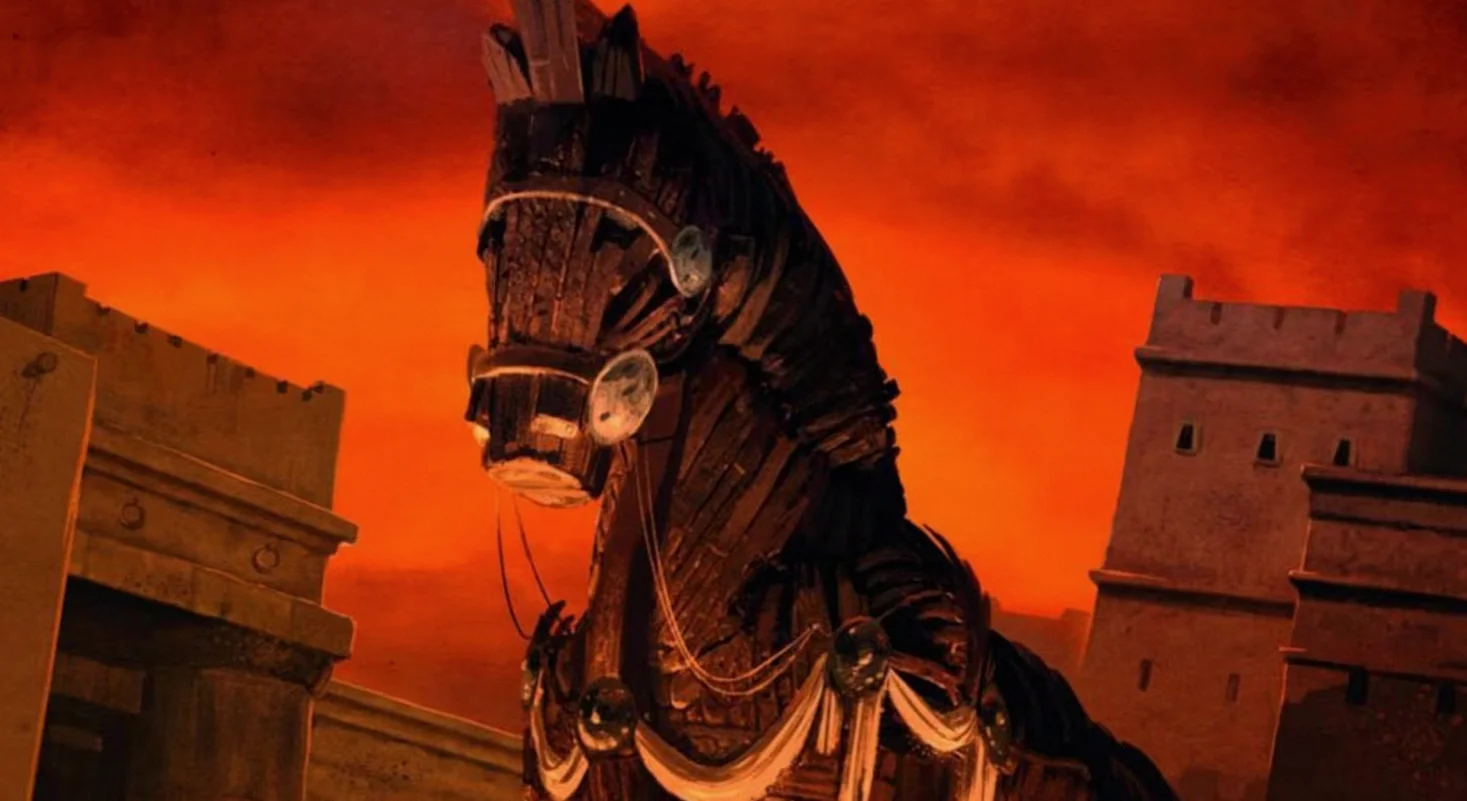
Even though La Ilíada is traditionally linked to Homer, its real narrative scope is often misunderstood—especially in pop-culture retellings that compress the Trojan War into three set pieces: the Trojan Horse, Achilles’ death, and the final fall of the city. This comic edition makes a clear point: those headline events are not actually told within Homer’s poem itself.
What this adaptation does differently
The adaptation’s premise is built around reconciling two expectations. First, it aims to honor Homer’s spirit—particularly the absolute weight of the gods and their constant interference. Second, it folds in episodes that modern audiences immediately recognize as part of “the Trojan War” story. The result is a single-volume version that is broader than Homer’s original focus, but still designed to preserve the drama and mythic intensity that made the epic so influential.
The project also aligns with the philosophy of Ferry’s myth-knowledge collection, La sabiduría de los mitos. The stated goal is not just to reproduce ancient tales, but to contextualize them for contemporary readers and explain why they still matter nearly three millennia later—functioning at once as adventure adaptation and as an introduction to Greek mythic thinking.
Gods vs. mortals: the Trojan War as a divine chess match
From the earliest pages, the comic frames the conflict as tragedy propelled largely by divine conflict. The script incorporates a notable Trojan cycle tradition: Zeus is said to favor the war because humanity has multiplied too much and the Earth can no longer carry its burden. In that telling, the war becomes an enormous contest among the Olympians, with human lives treated like pieces on a board.
The writing emphasizes that key gods—Zeus, Hera, Athena, Poseidon, Apollo, Aphrodite, Ares, and Hephaestus—aren’t passive observers. They conspire, manipulate events, protect their chosen favorites, and reshape the fates of heroes and kings. The adaptation’s core message is that, in Homer, gods are not background texture; they are as central as the humans fighting below them.
Achilles’ rage drives the story, and Agamemnon is the fuse
Alongside the supernatural warfare, the epic’s emotional engine remains the rivalry between Agamemnon and Achilles. The comic reflects the “Homeric wrath” that sets everything in motion: Agamemnon takes Briseis from Achilles as compensation for losing Chryseis, and the injured pride of Achilles leads to his withdrawal when the Greek forces most need him. That rupture triggers a chain of misfortunes that eventually culminates in the death of Patroclus and his later return to battle.
Rather than treating the conflict as a purely personal feud, the adaptation presents it as the heart of the poem’s themes—anger, honor, glory, and the cost paid by anyone swept up by those forces. The comic’s job, in this sense, is to keep a work composed almost three thousand years ago emotionally forceful for modern readers.
It also gives Hector a prominent place, portraying him as one of the most human figures in the epic. Where Achilles is obsessed with immortal glory, Hector fights for family, city, and the duty attached to his role—turning the inevitable clash between the two into something more than a straightforward battlefield duel.
Beyond Homer: later Trojan-cycle moments are integrated
After establishing the poem’s core beats, the volume expands outward and draws on later traditions to cover major moments readers expect from the broader Trojan myth. The deaths and signature plot mechanics tied to the legend—Achilles’ end, the deception of the horse, and the sack of the city—are incorporated in a way that links Homer’s epic to the other texts that shaped the legend over centuries.
That compression-and-expansion balancing act wasn’t described as easy. Condensing La Ilíada, part of the Trojan cycle, and later literary tradition into a single 168-page volume requires significant synthesis. The adaptation maintains narrative clarity for the most part, though it acknowledges that some secondary characters and side episodes might have benefitted from more room.
Art direction: historical realism and large-scale epic staging
Pierre Taranzano’s art is positioned as the second pillar of the book’s impact. As a French comics artist, illustrator, and painter, he’s credited with translating the epic’s grandeur into highly detailed visuals. His realistic style is described as meticulous with armor, weapons, ships, war machinery, and battlefield settings—aiming for a strong sense of historical rigor.
The comic also swings between intimate close-ups and massive crowd scenes with the same confidence. Battles are rendered with clarity and visual force, helping readers grasp the epic scale of Homeric combat: clashes that feel grand, chaotic, and tragic, with heroes and gods seemingly sharing the same stage.
Special emphasis is placed on how the pages distinguish mortal and divine spaces. The gods are given an almost physical, majestic presence, reinforcing the idea that human fate is being manipulated from above. The page layout typically uses classic, orderly composition to support readability, but breaks that routine when needed—using splash pages and double-page spreads to deliver scale and grandeur.
One standout image described is an overview-style depiction of the armies arrayed before Troy’s walls while the gods watch from the sky—an illustration that, in the adaptation’s own terms, summarizes the clash between men and divinities that made the Trojan War one of Western culture’s foundational stories.
A gateway edition for Homer’s world
For readers who want to approach La Ilíada without facing the full complexity of the original text, this hardcover from Yermo is presented as an accessible alternative. It’s described as preserving Homer’s core while intelligently adding elements that complete the wider Trojan cycle—and, crucially, explaining why the story continues to fascinate after nearly three thousand years.
Ultimately, the comic emphasizes that the Trojan War is not only about heroic battles. It’s a story of pride, destiny, glory, and the relationship between mortals and gods. With Bruneau and Taranzano translating that ambition into comic form without sacrificing spectacle or educational clarity, the book is framed as one of the more ambitious entries in the collection.