Insomniac Shows Marvel’s Wolverine Gameplay and PS5 Performance Targets
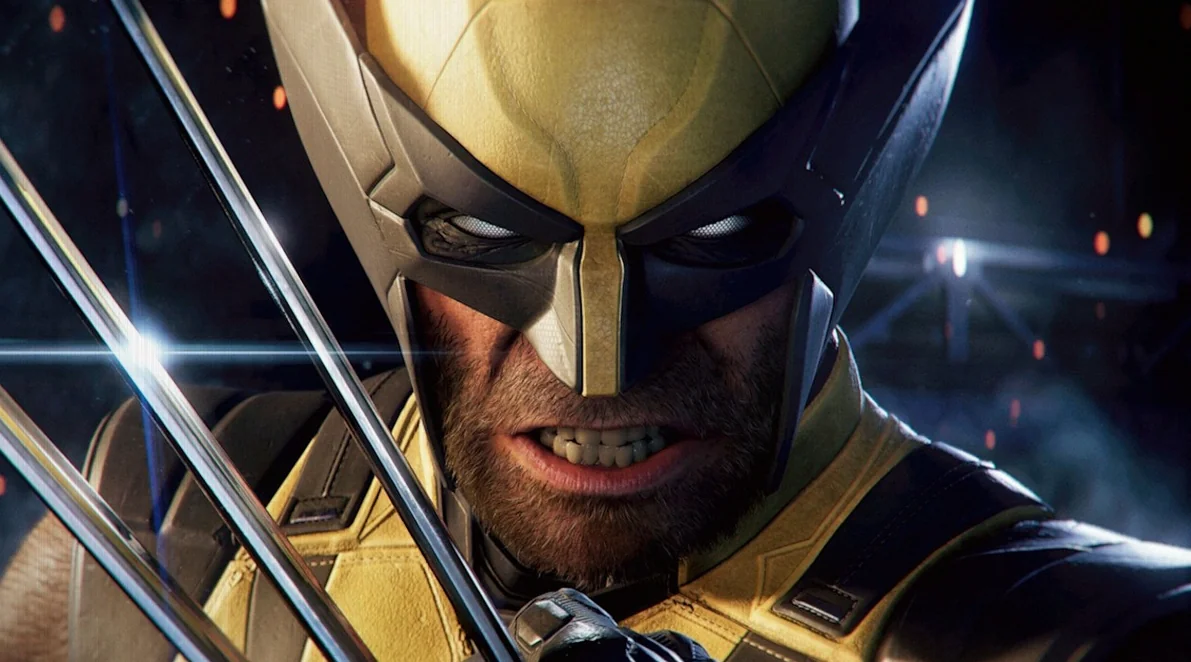
Insomniac Games used an upcoming showcase to give the clearest look yet at Marvel’s Wolverine, confirming how Logan will play, how the story is framed, and what the studio is aiming for on performance—plus a first round of hands-on impressions that are positive, but not without reservations.
Key takeaways
- Logan is the only playable character throughout the full adventure.
- The setting does not feature the X-Men as a formed group.
- On the standard PlayStation 5, the game is targeted at 60 frames per second with ray tracing enabled.
- The campaign is presented as a more linear, film-like experience rather than an open-world Spider-Man-style structure.
- Combat centers on claw combos, dodging, and parrying, with enemies able to punish mistakes immediately.
- A Rage system drives escalation, including an uncontrollable high-tier state that triggers automatically after the meter fills.
Only Logan, and not a classic origin tale
Insomniac Games confirmed that Marvel’s Wolverine will keep you in control of Logan exclusively for the entire game, with the studio explicitly stating that Wolverine is the only playable character.
That marks a shift from earlier Insomniac releases where players could take over other figures—most notably Mary Jane Watson in Marvel’s Spider-Man—whose stealth-focused segments were among the more divisive parts of that series for some players.
The narrative approach also avoids a ground-up origin story. When the main action begins, Logan already has adamantium fused to his bones, though he does not remember how or why it happened. The game touches briefly on his earlier life, and the opening hours include a meeting between a feral Logan and Nathaniel Essex, after which the story jumps forward several years.
Mutants without the X-Men—and a different relationship focus
Inside this version of the Marvel universe, the X-Men have not yet formed. Instead, Wolverine is described as a former member of Team X, a covert mutant unit tied to figures such as Sabretooth and Mystique. Other major names are set to play important roles as well, including Jean Grey, Nathaniel Essex, and Bolivar Trask.
Narrative director Walt Williams described the absence of a safe, established mutant refuge as a deliberate creative choice. The intent is to portray mutants as outsiders living on the margins—without the security of an organized community—while positioning Logan as someone who even among mutants still feels alienated.
Insomniac also said it will not recreate the well-known love-triangle setup involving Logan, Jean Grey, and Cyclops. The story will instead focus strictly on the relationship between Logan and Jean Grey.
60 fps with ray tracing on PS5, plus a brutal, linear combat loop
Beyond story and cast, the technical presentation was a major talking point. Insomniac said Marvel’s Wolverine should run at 60 frames per second by default on the standard PlayStation 5 while ray tracing is enabled.
Jess Reiner-Reed, a senior project director, explained that hitting 60 fps on base hardware was an early production goal, and she characterized the result as “extremely smooth.”
In the hands-on preview, journalists spent roughly two hours with the build. One of the first structural surprises: the game does not include an open world in the style of Spider-Man. The studio is pursuing a more linear, story-driven adventure that sends Logan across different locations around the world, based on the idea that this framework better fits a character who isn’t anchored to a single place.
Combat borrows some design DNA from Spider-Man games, but it has been reworked for Wolverine’s personality. Logan is described as heavier and more direct than Peter Parker, yet not sluggish—able to close distance quickly, climb walls, and rapidly move between targets.
The demo’s combat emphasis is aggressive pressure. Players rely on claw combinations, dodges, and parries, while enemies do not wait their turn. Wolverine can be surrounded, and despite regeneration, he can go down fast if the player loses control. More specialized foes also appear, including shield-wielding enemies, alongside tools and devices that limit Logan’s healing.
Violence is a major part of the identity. The claws are shown severing limbs, blood fills the screen, and certain finishing sequences leave very little to the imagination. At the same time, Insomniac framed the brutality as a consequence of Logan’s fighting style rather than something meant to depict him as enjoying killing. Players who prefer a toned-down experience can reduce the level of gore through accessibility settings.
Rage mechanics, upgrades, and the “Nightmare Doors”
The key gameplay mechanic is a Rage meter that fills when Logan stays on the offensive. Rage is split into three levels. At the second level, Logan grows stronger and gains access to Last Stand, an ability that lets him rise back up after losing all health using the accumulated Rage.
At the third level, the game shifts dramatically: colors drain away, enemies are highlighted in red, and Logan gains significantly stronger attacks along with the ability to perform faster executions. This escalation is intended to reflect Logan’s struggle to control his anger. Importantly, the highest Rage state is not something the player manually activates—once the meter fills, Logan loses control automatically.
Progression is also tied to character development. The demo indicated four slots for special techniques, alongside an adaptation system that grants passive bonuses. Exploration provides resources and collectibles, including whisky bottles and crafting materials for new outfits.
For additional challenges, the game includes Nightmare Doors that lead into surreal activities. These can be combat tests or timed platforming sections, and completing them reveals fragments of Logan’s lost memories.
Insomniac also confirmed features for replayability at launch, including New Game Plus and a Mission Replay function that allows players to revisit completed missions—such as to find missed collectibles.
Early reactions: impressive brutality and pacing, uneven moments in group fights
Journalists’ initial impressions from the demo were largely favorable. They singled out the brutality and the weight of encounters as strong expressions of Wolverine’s character. They also praised smoother transitions between exploration, stealth-like moments, combat, and cinematic sequences, including opportunities to interact with the environment—such as tossing enemies from height or breaking elements of the level.
Several calmer scenes were highlighted as memorable for the way they slow things down between fights. In Lowtown, players can temporarily sheath their claws, talk with other mutants, and take on Sabretooth in a hand-to-hand struggle. Mystique’s minigame “Nevermore” was also mentioned as a standout, with writers crediting these sections for better character context and a breather from constant violence.
Still, the demo did not land perfectly with everyone. One journalist said it impressed them but didn’t trigger the kind of “jaw drop” reaction associated with the original Marvel’s Spider-Man. Others pointed out that Wolverine’s early beats don’t deliver the same fresh-feeling surprise that the first Spider-Man outing offered—particularly in relation to the mobility and web-based movement that immediately grabbed attention.
Concerns also came up around larger enemy groups. In early segments, having many attackers at once sometimes created chaos, and targeting specific enemies wasn’t always as precise as expected. A large Sentinel encounter was described as less surprising, with the core idea focused on evading its attacks and striking exposed weak points.
Those issues may lessen as the player gains more tools. Later parts of the demo reportedly provided additional techniques and upgrades, improving control over groups and making it easier to tailor the fight style to player preferences.
After a few hours, it’s difficult to call the project a genre reinvention. Marvel’s Wolverine builds on Insomniac’s established action foundations from the Spider-Man games, and not every journalist felt the same immediate “wow” as the first Spider-Man did. Even so, they emphasized that this is not “Spider-Man with Wolverine swapped in”—Logan’s pacing, brutality, and story framing are intended to feel distinctly his own.
Marvel’s Wolverine launches on PlayStation 5 on September 15.