Ron Gilbert Secures Funding for Thimbleweed Park 2 After Publisher Stall
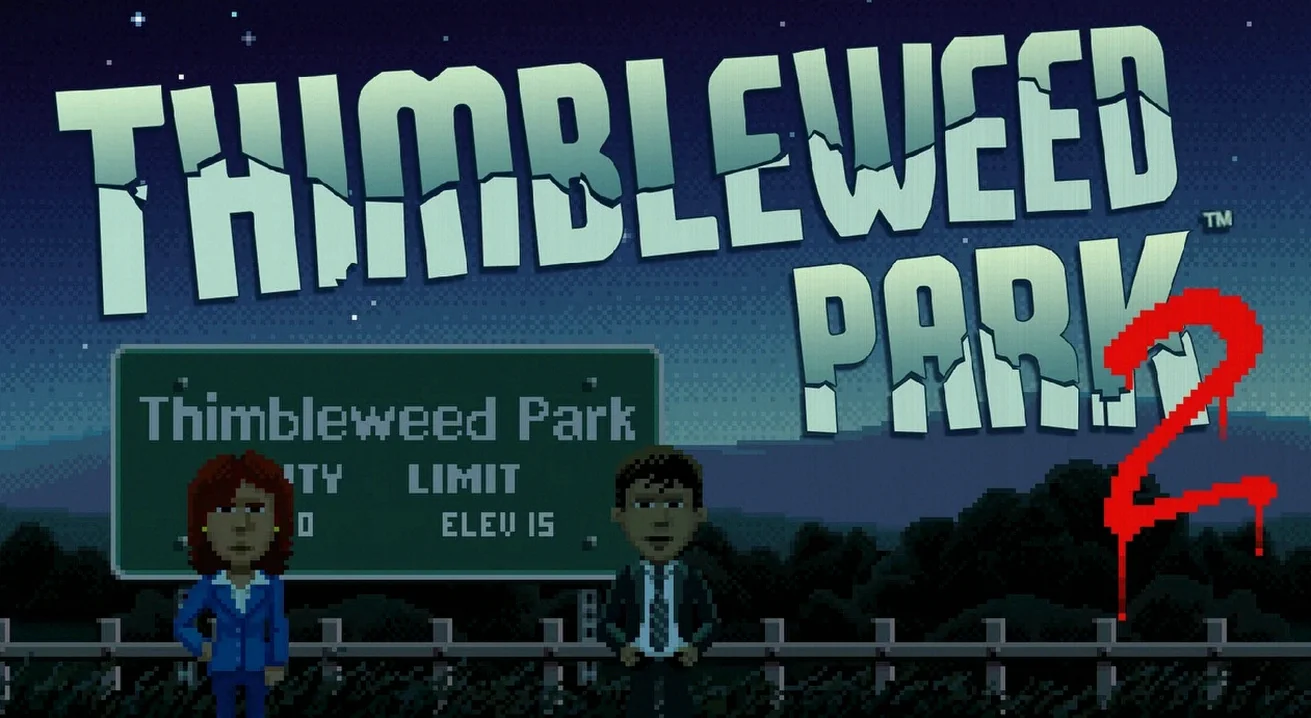
Ron Gilbert’s long-discussed follow-up to Thimbleweed Park has finally cleared its biggest hurdle: money. In an interview, Gilbert explained how the sequel shifted from stalled publisher interest to a deal backed by an anonymous, non-industry benefactor who simply wanted to fund more classic adventure games.
Quick facts
- Thimbleweed Park 2 is in production
- Release window: early 2028
- Platforms confirmed: PC (Steam, GOG), Nintendo Switch, PlayStation, and Xbox
- Story returns to Thimbleweed Park for a long, strange night at Edmund Mansion
- Key returning characters: agents Ray and Reyes
- Original team members returning: Mark Ferrari, Gary Winnick, David Fox, Octavi Navarro, and Robert Megone
- Music again by Steve Kirk
Why publishers stalled the sequel
Gilbert said traditional publishers were interested in a continuation of Thimbleweed Park, and the interest was “substantial.” The problem wasn’t enthusiasm—it was the structure of the deals that came with it. He was blunt about what he disliked: publishers typically want to recoup their investment first, but then still demand a majority of the remaining money afterward.
He also pointed to contract terms that left the creator earning almost nothing unless the game became a major hit—something that doesn’t happen often. Because of that risk and the way previous proposals were designed, Gilbert said he didn’t want to run another Kickstarter to finance a sequel after the first one.
A fan with deep pockets changed everything
The breakthrough came through a familiar industry chain of introductions. A friend of Gilbert mentioned that he knew a wealthy person outside gaming who was a fan of adventure games—specifically Thimbleweed Park.
Gilbert initially didn’t fully trust the lead and asked for a direct connection, noting it wasn’t the first time something like this had been suggested to him. Once he confirmed the seriousness of the proposal, he prepared a realistic budget—just over one million dollars—higher than the original game’s cost, with inflation considered so the full team would be paid fairly.
The anonymous investor approved the plan. In Gilbert’s view, the arrangement is more fair than anything publishers offered: the investor recovers their contribution quickly, and then profits are divided in a more reasonable way. That means Terrible Toybox can publish the game under its own banner, without needing to rely on a traditional publisher.
Production starts, and the sequel becomes “more Thimbleweed Park”
Thimbleweed Park 2 is now in development, with a target release set for early 2028. Contrary to earlier rumors, it’s not limited to PC: editions have been confirmed for Windows, macOS, and Linux via Steam and GOG, plus releases on Nintendo Switch, Xbox, and PlayStation.
On the story side, Gilbert’s team is sending players back to the town of Thimbleweed Park for “one long, strange night.” Edmund Mansion is the focus, where a body has been found, and the investigation is handled by Ray and Reyes—returning agents from the first game. The suspects, as you’d expect, are the guests staying at the residence.
There’s also an immediate tone-setting note from the developers: this is not “the butler.” Gilbert further clarified that players shouldn’t treat the sequel as a strict sequel or prequel—he frames it instead as “more Thimbleweed Park.”
The team and music return intact
For fans worried that a follow-up might drift away from the original identity, Gilbert’s message is straightforward: the core crew from the first game is back. The team includes Mark Ferrari, Gary Winnick, David Fox, Octavi Navarro, and Robert Megone, with Steve Kirk returning to handle music.
In other words, Thimbleweed Park 2 isn’t just being funded differently—it’s being made by the same people, with the same kind of sensibilities that made the 2017 original a cult hit.