Katsushi Murakami Dies at 83, Creator Behind Chogokin and Super Sentai Mechs
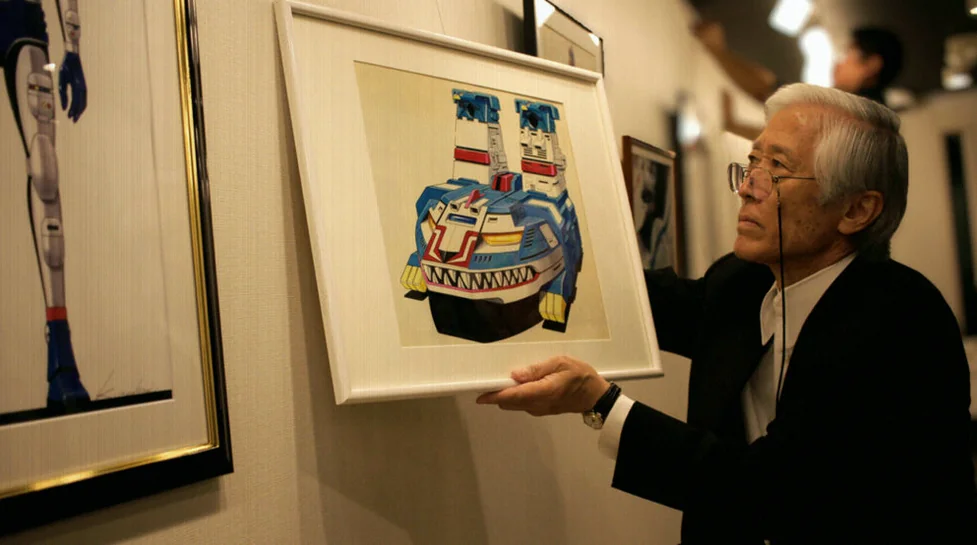
Industrial designer Katsushi Murakami, a key figure behind Japan’s most influential robot toys and tokusatsu visuals, has died aged 83 on July 20, 2026. Born September 23, 1942 in Gifu Prefecture, he built a legacy that reaches from metal die-cast robot lines to the giant-mech formula that helped define Super Sentai (and, by extension, Power Rangers).
From Bandai and Popy to the toys that shaped generations
Murakami began his career as an industrial designer and joined Bandai in the 1960s before moving to Popy, the licensing-focused toy division. There, he applied industrial engineering standards to children’s toy production, emphasizing real weight, intricate transformation mechanisms, and durability that stood out for the time. He was also inspired by creators including Osamu Tezuka and Shigeru Komatsuzaki, helping him connect television production, animation, and toy manufacturing in a way that made the screen-to-shelf bridge feel seamless.
He is widely regarded as the father of Chogokin, the celebrated line of die-cast metal robot toys first produced by Popy and later by Bandai. He also developed Popynica, a parallel line focused on vehicles. Together, these lines reshaped the Japanese toy market during the 1970s and 1980s and remain collector favorites worldwide.
- Birth: September 23, 1942 (Gifu Prefecture)
- Death: July 20, 2026 (age 83)
- Key toy lines: Chogokin; Popynica
- Major company work: Bandai (from the 1960s), then Popy
Leopardon’s toy success helped lock in the Super Sentai giant-mech era
Murakami’s most disruptive, long-lasting impact may be how toy design influenced the structure of TV series. During production of the 1978 Japanese live-action Spider-Man film made by Toei, he designed and introduced Leopardon, a giant robot piloted by the hero. While a mecha alongside Spider-Man may have sounded unconventional, Leopardon’s toy sales were reportedly dramatic enough to persuade Toei to use the same approach across its squadron series.
Starting with Battle Fever J, the combinable giant robot became a defining feature of every Super Sentai season, and that concept later traveled internationally through Power Rangers.
Major tokusatsu and anime design credits—plus Mechagodzilla’s iconic look
Murakami’s tokusatsu work extended well beyond Super Sentai. In Kamen Rider, he contributed significantly to Kamen Rider Black RX, where after Shotaro Ishinomori stepped back, the designs shifted in a direction strongly influenced by Murakami and Keita Amemiya—while still keeping the protagonist’s core design aligned with Ishinomori’s original guidance. He also helped revise original designs for Kamen Rider ZO and Kamen Rider J by modifying Ishinomori’s early sketches.
He served as an executive producer on Shin Kamen Rider: Prologue and Kamen Rider SD.
For Ultraman, Murakami contributed to vehicle design for Ultraman 80 (1980) and proposed an early concept for Ultraman Tiga, including a suggestion to change the head design that influenced the final character look. He also submitted an original concept for Ultraman Powered, though it was not used.
His anime portfolio included work on Cobra (known in Italy as Space Adventure Cobra), Ulisse 31, God Mars, the Gatchaman series, and Z Gundam. In tokusatsu, he left his mark on the armor and machinery of Uchu Keiji Gavan and other projects. He also worked on Beast King GoLion, which later became Voltron in the West.
Murakami developed the Machine Robo toy line, which arrived internationally as GoBots. The line helped popularize transformable robots in a smaller format at around 600 yen, bringing the category to a broader audience. Among the base designs from this line were Bike Robo and Jet Robo.
Among his less widely known but important contributions is the original Mechagodzilla design for the Heisei era, seen in Godzilla vs. Mechagodzilla II (1993). Special effects director Koichi Kawakita turned to Murakami to create a new take on the alien robot: Murakami’s concept abandoned the previous versions’ rough, angular lines in favor of a curved, futuristic, silver-and-glossy appearance. Kawakita was satisfied with the interpretation, which was then developed into the final version by Minoru Yoshida—making the credit a co-creation, but with Murakami’s conceptual contribution described as decisive for the look fans associate with one of the franchise’s most loved Mechagodzilla designs.
PLEX era and what fans will remember next
When Popy was absorbed and turned into the studio PLEX in 1981, Murakami continued working there, carrying his influence into ongoing tokusatsu and Japanese animation production. Following the announcement of his death, condolences from industry professionals and fans circulated widely, reflecting the idea that even when he wasn’t always in the spotlight, his designs helped shape the visual language of an entire era.