Studio Ghibli’s Laputa Released in 1986: Miyazaki’s Big-Children Breakthrough
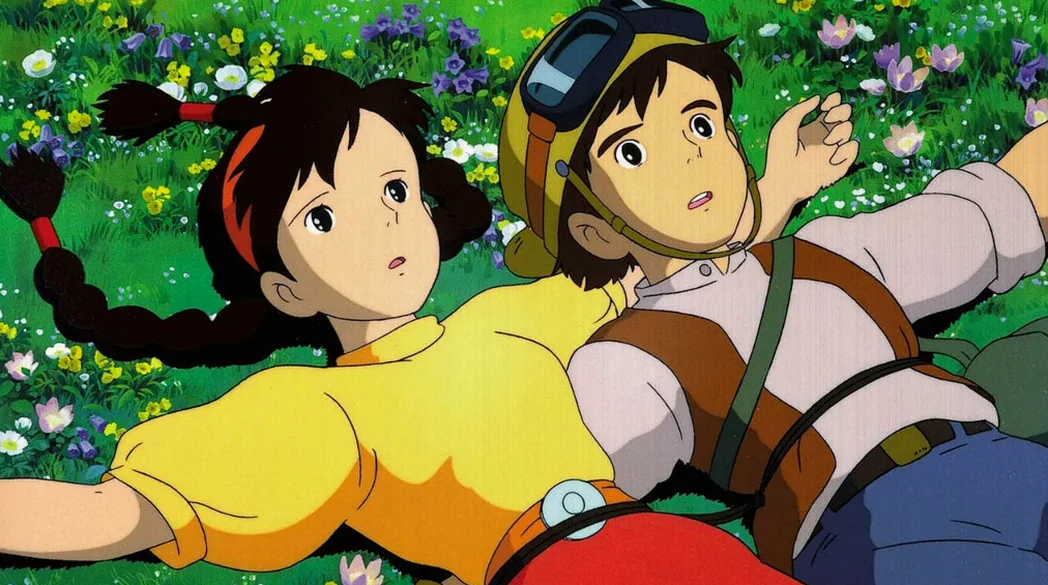
On 2 August 1986, Japanese animation marked a milestone on the big screen with the release of Hayao Miyazaki’s first film as the newborn Studio Ghibli’s flagship project: Laputa: Castle in the Sky. The adventure follows Pazu and Sheeta as they search for Laputa, a floating fortress said to hold an overwhelming secret weapon—something that Colonel Muska and his forces want for themselves.
From a contract clause to a studio’s birth
- In connection with Nausicaä, Miyazaki had a contract arranged with the help of producer Toshio Suzuki that included a direct share of profits going to the director. As a result, Miyazaki ended up with 60 million yen he could use.
- Suzuki advised Miyazaki to lend part of that money to Isao Takahata, who was then working on a documentary about the Yanagawa canals.
- Takahata’s production ran beyond expectations, consuming all the available funds and leaving Miyazaki indebted. In a desperate situation, Miyazaki asked Suzuki for help so he wouldn’t be forced to mortgage his own home.
- To solve the problem, the pair moved toward making a new film—leading to the creation of Laputa. Suzuki later argued that without Takahata’s choice to go beyond the initial plan, Laputa would never have been made.
There was also the studio question. Topcraft had effectively become a “ghost studio” after struggling to complete Nausicaä, and Miyazaki’s reputation for a demanding, strict approach made it hard to find a willing partner. With support from Tokuma Shoten, a new studio was created specifically to let Miyazaki finish his film.
This is how Studio Ghibli came into existence. It was not initially meant as a long-term corporate project; instead, the guiding mindset was simple: make a film, then decide what to do next depending on whether it succeeds. Because the studio’s stability was uncertain, workers were hired on a per-project basis. The idea was that only the success of Kiki’s Delivery Service would enable company restructuring, allowing Ghibli to bring animators onto indefinite contracts with higher pay.
The story’s core: a grounded adventure with emotional stakes
Laputa pairs its search plot with a crew of oddball sky pirates led by Mama Dola, a fearsome older woman determined to seize Laputa’s legendary hidden treasures. The film’s premise positions the youth-focused wonder of discovery against greed and militarization, with the “secret weapon” at the center of the conflict between the explorers and Muska’s army.
Beyond the plot, Miyazaki also framed the project as a deliberate attempt to shape what animation should feel like for younger viewers. He described Nausicaä as a more mature film, then set Laputa on a different course—aimed at elementary school students—intending it to be a classic, entertaining action story rather than a “cool” memorability play.
In his view, the film would offer both laughter and tears, built around sincere sentiment, emotional bonds, and personal sacrifice—elements he believed children can understand even if older audiences underestimate what they want. He also emphasized that most contemporary animation (with the exception of Doraemon) leaned heavily toward serious, dramatic gekiga; Laputa would instead revive more traditional manga-and-film entertainment.
Miyazaki noted that targeting around fourth graders could broaden the reach even further downward to younger children, while still leaving room for older fans and adults who want a simpler, more childlike way to enjoy a movie. The larger concern was that animation’s audience was drifting upward, increasingly chasing niche tastes and creating more subcategories—something he said shouldn’t override the idea that animation belongs first to children.
He went as far as describing Laputa as a project to return animation to its roots.
Why adult-oriented anime became a point of contention
The push-and-pull around Laputa also connects to broader industry shifts. During the second “anime boom,” which had momentum from titles such as Yamato and Gundam, the industry looked toward adolescents and young adults with a different kind of animation than what had dominated earlier. Japan’s economic conditions and the spread of domestic electronic media helped producers sell TV anime on home video, and even build titles designed specifically for that format without relying on television schedules.
That direct-to-fans approach helped popularize the OVA format (Original Video Animation), built for home video sales.
Miyazaki, however, was not supportive. He disliked the direction of gekiga that had emerged from late Mushi projects and then spread across other studios. Years later, he also criticized Osamu Dezaki’s second series of Rocky Joe, saying it “smelled of death.”
Miyazaki’s personal pivot toward children’s cinema
During his final year of high school, while he was occupied preparing for university entrance exams, Miyazaki was still aiming to become a manga artist. In rebellion against his reputation as a “good kid,” he began drawing darker, dramatic gekiga. Around that time, The Legend of the White Serpent was released; it became the first Japanese animated color feature and a defining showcase for the then-new Toei Doga.
Miyazaki was deeply moved by the film. He said he ended up spending the entire evening crying under his kotatsu, captivated by the film’s sincere world and by its female lead, Bai Niang. He felt so attached he couldn’t stop thinking about her, treating her almost like a surrogate partner during a period when he didn’t have one in real life. He rewatched the film many times and, ultimately, decided to become an animator with the goal of creating works for children.
Later, his excitement during screenings of Panda! Go Panda!, where young audiences reacted intensely in theaters, convinced him that this was the right path.
A general-audience philosophy for animation
Within the context of all these decisions, Miyazaki became the strongest advocate for a more general, younger-facing style of animation. He contrasted this with the more niche adult-or-otaku approaches associated with mecha, OVAs, and “late night anime” that grew prominent toward the late 1990s and early 2000s.
He also pointed to earlier traditions and major currents—such as the World Masterpiece Theater produced by Nippon Animation—as examples of where mainstream storytelling could continue to thrive.