Spain and Morocco Step Up Battle to Host 2030 World Cup Final
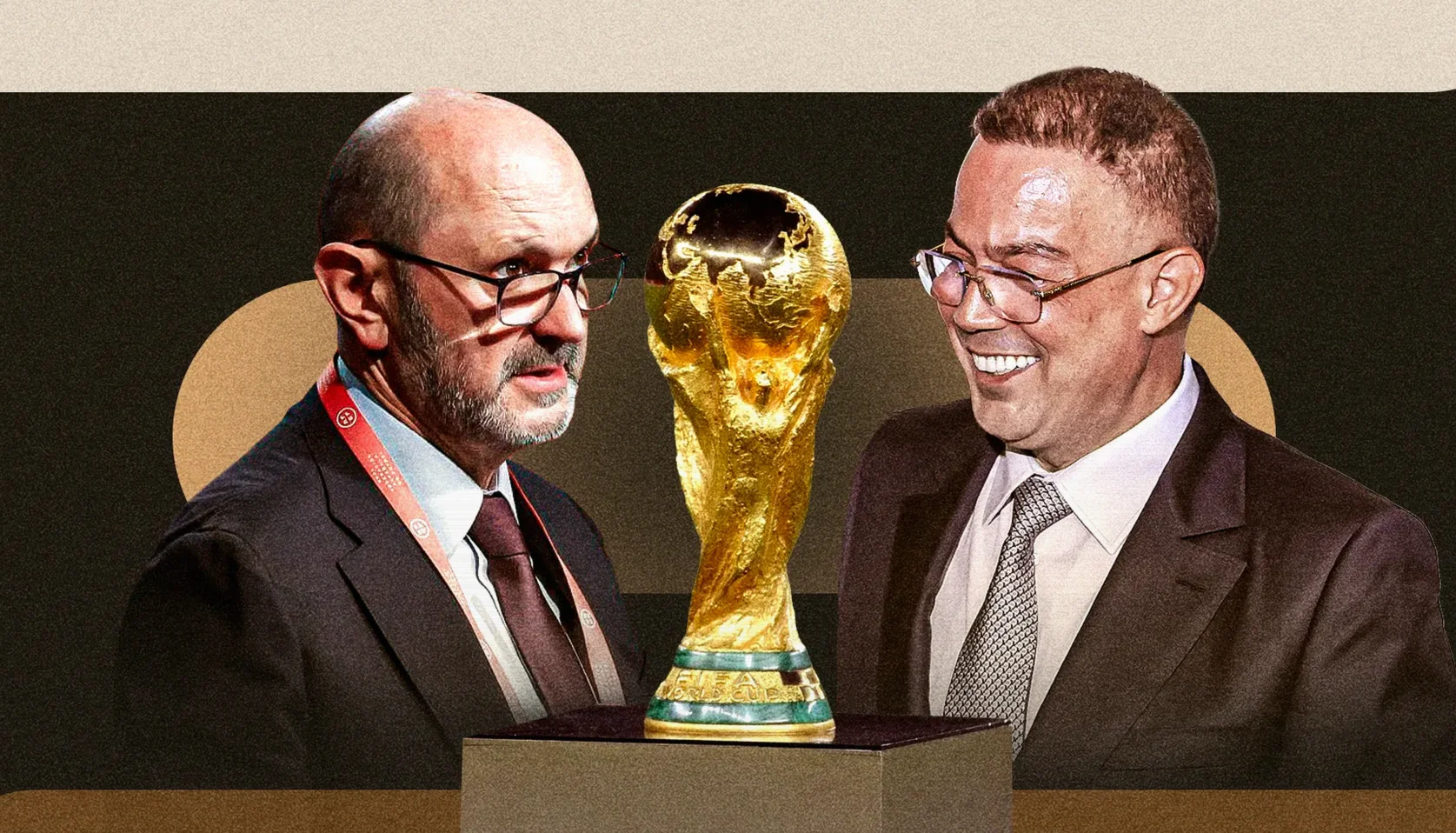
The contest to host the 2030 World Cup final has developed into a significant point of tension within the Spain-Portugal-Morocco partnership, with Spanish and Moroccan football leaders advancing rival cases for the tournament’s showpiece match.
FIFA has awarded the centenary World Cup to the three European and North African hosts, while Argentina, Uruguay and Paraguay will stage commemorative opening fixtures to mark 100 years since the inaugural tournament. The final venue has not yet been selected, and FIFA generally settles that question around two years before the competition begins.
Spain’s football federation president Rafael Louzán has repeatedly stated his belief that the final should be played in Spain. He has said it would be hard to justify denying the country the match given its organisational capacity, with the rebuilt Santiago Bernabéu and the redeveloped Camp Nou viewed as leading options.
Morocco, however, is pressing for the new stadium planned in Casablanca, which is expected to hold about 115,000 spectators. Royal Moroccan Football Federation president Fouzi Lekjaa has made clear that Morocco does not intend to be treated as a junior member of the joint bid and wants the country to host a final of historic importance.
Racism debate adds pressure to Spain’s case
The argument over the final has become increasingly connected to racist and anti-Muslim incidents at Spanish football matches. Vinícius Júnior has been at the centre of that wider debate since enduring racist abuse at several grounds, most notably at Mestalla.
The Valencia case led to the first prison sentences imposed in Spanish football for racist abuse of supporters, but Vinícius has also spoken about the personal effect of repeated incidents. The Brazil forward said persistent abuse, and the lack of consequences he felt often accompanied it, had at times diminished his desire to continue playing.
In an international television interview, Vinícius argued that Spain should lose the right to host the 2030 World Cup if the country did not make meaningful progress in combating racism. He said players could not feel secure in an environment where the colour of their skin could make them targets.
His comments prompted strong criticism from parts of Spanish football, with several figures insisting that racist conduct came from a minority rather than representing Spanish society. Dani Carvajal and others have pointed to La Liga’s anti-racism procedures and to judicial action taken in the Mestalla case as evidence that institutions are responding.
Yet further incidents have kept the issue in focus, extending the discussion beyond abuse directed at Vinícius alone and creating an uncomfortable backdrop for a country seeking the World Cup final.
Spain-Egypt friendly investigated
A major flashpoint came during Spain’s friendly against Egypt at Espanyol’s RCDE Stadium in Barcelona. Soon after kick-off, chants of “Whoever doesn’t jump is a Muslim” were heard from part of the crowd. The chant was repeated during the match despite warnings delivered through the stadium’s internal announcements and screens.
Organisers reminded spectators that racist behaviour in sporting venues can carry legal consequences. Some supporters responded to those announcements with boos.
Catalan police opened an investigation into what they described as Islamophobic and xenophobic chanting. The Spanish Football Federation condemned the incident, stating that racism and hate had no place in football, while FIFA subsequently opened disciplinary proceedings against the federation.
The Egyptian Football Association also criticised the chants, describing them as unacceptable conduct by a minority rather than a reflection of Spanish people as a whole. It underlined its rejection of disrespect towards the Egyptian anthem or the Islamic faith.
Lamine Yamal was reported to have been upset by the episode. The Barcelona and Spain forward, who is of Moroccan and Equatorial Guinean heritage and is Muslim, went directly to the dressing room after his involvement in the match rather than completing the customary acknowledgement of supporters.
Yamal later called the chants ignorant, racist, disrespectful and unacceptable. He said that he is Muslim and that making religion a subject of mockery amounted to ignorance and hate speech.
He has since said he has experienced racism “a thousand times” during his career. Yamal explained that racism was not always expressed through direct insults, but could also appear in remarks or behaviour whose racial character was not recognised by those responsible.
Further chants near major stadiums
The slogan heard during the Egypt friendly also appeared in videos circulated before Real Madrid’s Champions League quarter-final against Bayern Munich, when a group of supporters were filmed near the Santiago Bernabéu chanting the same words.
Reports also highlighted chants aimed at Yamal by Atlético Madrid supporters during a Champions League quarter-final first leg. Among the alleged taunts were “Go back to Morocco” and “Go and play for Morocco”, comments that focused on the player’s origins and religious identity.
In September 2026, the Bernabéu returned to scrutiny after further footage emerged showing some Real Madrid fans near the stadium before a Champions League match with Inter Milan. The clips were said to contain racist, antisemitic and Islamophobic chants.
The Bernabéu’s place among Spain’s prospective final venues means each such episode carries added significance. The concern is no longer limited to isolated incidents at grounds distant from the potential World Cup final stage.
Omar El Hilali, Espanyol’s Morocco international full-back, has also addressed racism in Spanish football. A match involving Elche was stopped temporarily after El Hilali alleged that striker Rafa Mir had insulted him with a racial reference to his immigrant background. La Liga’s anti-racism protocol was activated and an investigation followed.
El Hilali later rejected anti-Muslim chanting in stadiums and referred to the Spain-Egypt match. He said that ridiculing any religion was unacceptable, adding that Yamal deserved respect as a Muslim player of Moroccan origin who chose to represent Spain.
Morocco promotes stadium programme
Morocco has sought to strengthen its own final-hosting case through its preparations for the 2025 Africa Cup of Nations. The country used the tournament to display nine stadiums across six principal cities, combining refurbished venues with newly constructed facilities built to modern standards for capacity, access and playing conditions.
Prince Moulay Abdellah Stadium in Rabat hosted both the opening match and final of the Africa Cup of Nations, while Casablanca’s Mohammed V Stadium was among the established grounds upgraded as part of a wider programme linked to the 2030 project.
There was controversy over refereeing at the Africa Cup of Nations final, and Louzán used the occasion to question elements of Morocco’s organisation. Nevertheless, the country’s infrastructure and facilities received widespread praise, reinforcing the view that Morocco could stage the World Cup’s biggest matches.
Morocco’s case is also based on symbolism. The country presents itself as a culturally and religiously diverse host preparing for its first World Cup, with an emphasis on openness and coexistence. That message aligns with FIFA’s stated zero-tolerance approach to racism and hate speech.
Spain retains considerable strengths: a long record of staging major events, established transport networks and high-level stadium options in Madrid, Barcelona, Seville and other cities. But the final decision will also carry a broader message for a tournament expected to reach billions of viewers.
With FIFA yet to make its choice, the debate will continue to run on two tracks. Spain’s bid rests on its experience and established football infrastructure, while Morocco is presenting both a rapidly modernised venue programme and a case for a final that reflects the diversity the World Cup seeks to celebrate.